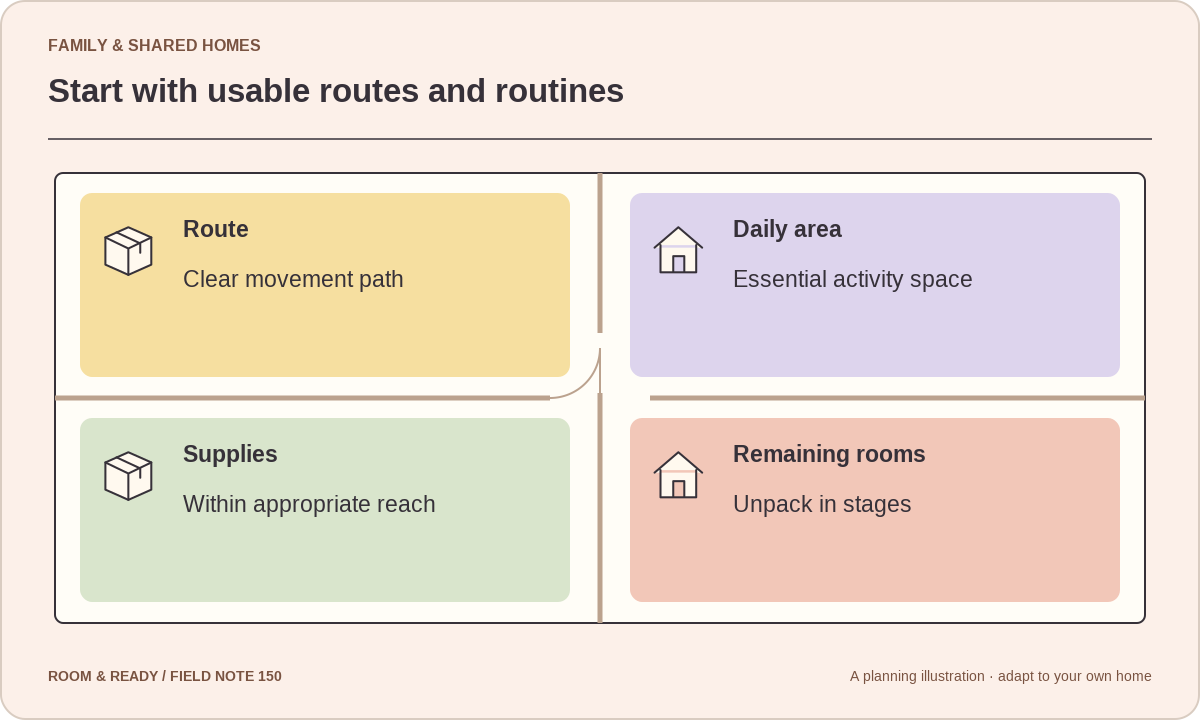

An unpacking order should reflect the people using the home. Consider mobility, reach, fatigue and other individual needs through the household's existing arrangements and professional advice where relevant. A room that looks tidy may still be difficult to use if essential items are poorly placed.
Identify the first required activities
Discuss what each person needs to do on arrival and the following morning. Plan clear routes and suitable positions for the relevant belongings. Do not use an essential access area as temporary carton storage simply because it is empty.
Give helpers precise placement instructions
Use room signs and a simple plan showing where boxes may stand. Keep needed equipment and supplies on their agreed route, following their instructions. Ask helpers to check before moving an item that has a deliberate accessibility role.
Review with the person using the space
Test the ordinary routine together where appropriate and adjust placement based on actual use. Keep the next unpacking session focused on the remaining obstacles. Avoid buying or installing accessibility-related equipment from a generic checklist; individual requirements should guide those decisions with suitable expertise.