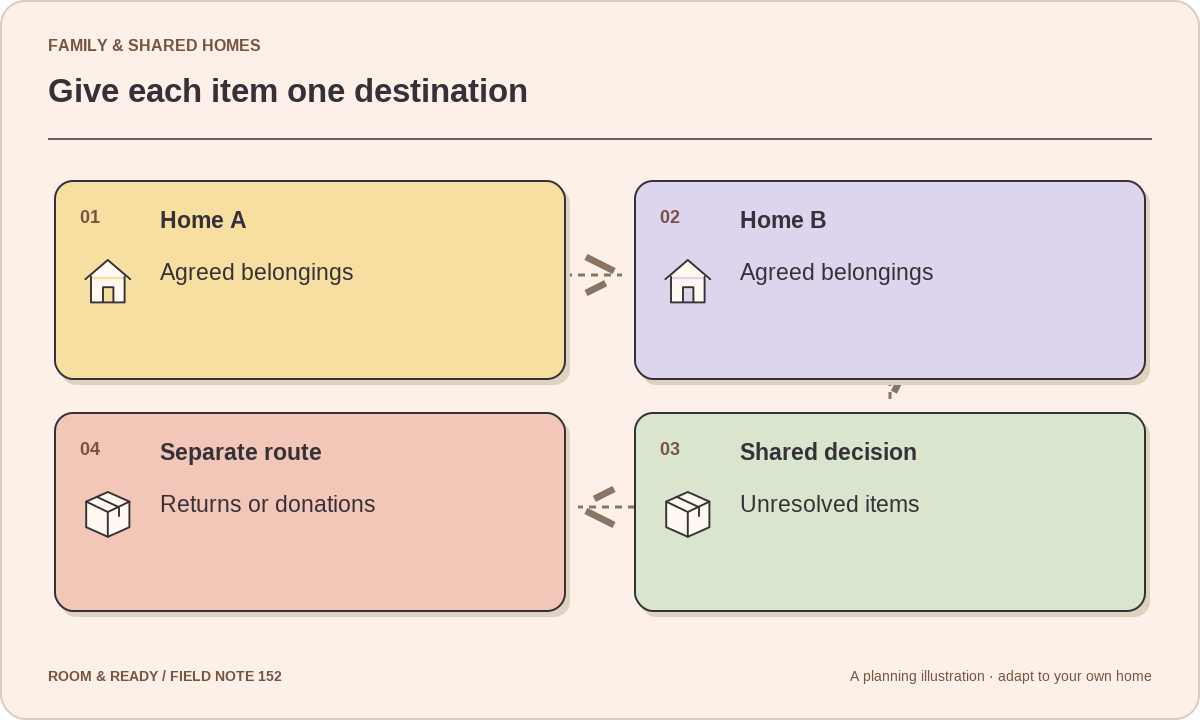

When belongings are going to two homes, room labels alone are not enough. A carton marked kitchen could belong to either address. Resolve ownership and destination first, then use a visible destination code alongside the room name and box identifier.
Create distinct staging groups
Keep the two destination loads physically separate where possible. Use readable words or codes, supported by color if helpful. Do not rely on color alone, and avoid exposing full private addresses on every carton when a simpler agreed code will work.
Resolve shared items before sealing
Record the agreement for jointly used furniture, appliances and household supplies. Keep uncertain items out of both loading groups until the decision is made. Assign collection or transport responsibilities separately from ownership.
Check each departure
Compare the actual load with the destination list before it leaves. Give each receiver the relevant inventory rather than the whole household record. Track items on separate return or donation routes so they do not become accidental additions to whichever vehicle still has room. Close the shared list only after both destinations and remaining handoffs are reconciled.