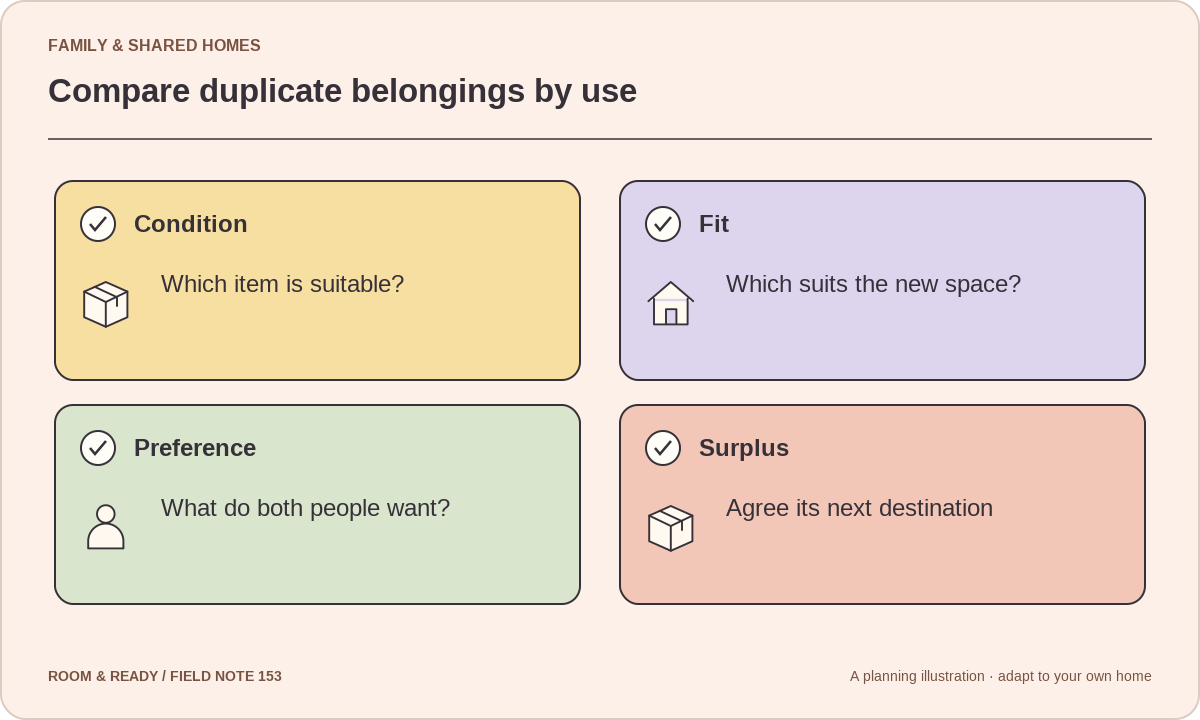

Combining households often produces duplicates before it produces organization. Review the main furniture and daily equipment together while both collections are accessible. The decision should consider condition, fit and preference rather than automatically keeping whichever item is packed first.
Start with the large decisions
Compare beds, tables and storage furniture against the new home's measurements. Agree on the pieces that will define the layout. Then review kitchen equipment and everyday duplicates, keeping enough for actual use without transporting two complete systems by default.
Make ownership and consent clear
Each person should decide what happens to their belongings. Record agreed donations, sales or storage arrangements and who will complete them. Keep sentimental items out of a rushed efficiency exercise; they may need a separate conversation and a different timeline.
Unpack into shared categories
Use destination labels that both people understand and place retained duplicates deliberately. After a week of normal use, review whether the arrangement works for both routines. Avoid letting one person's previous organization become the automatic rule simply because their cartons arrived first.