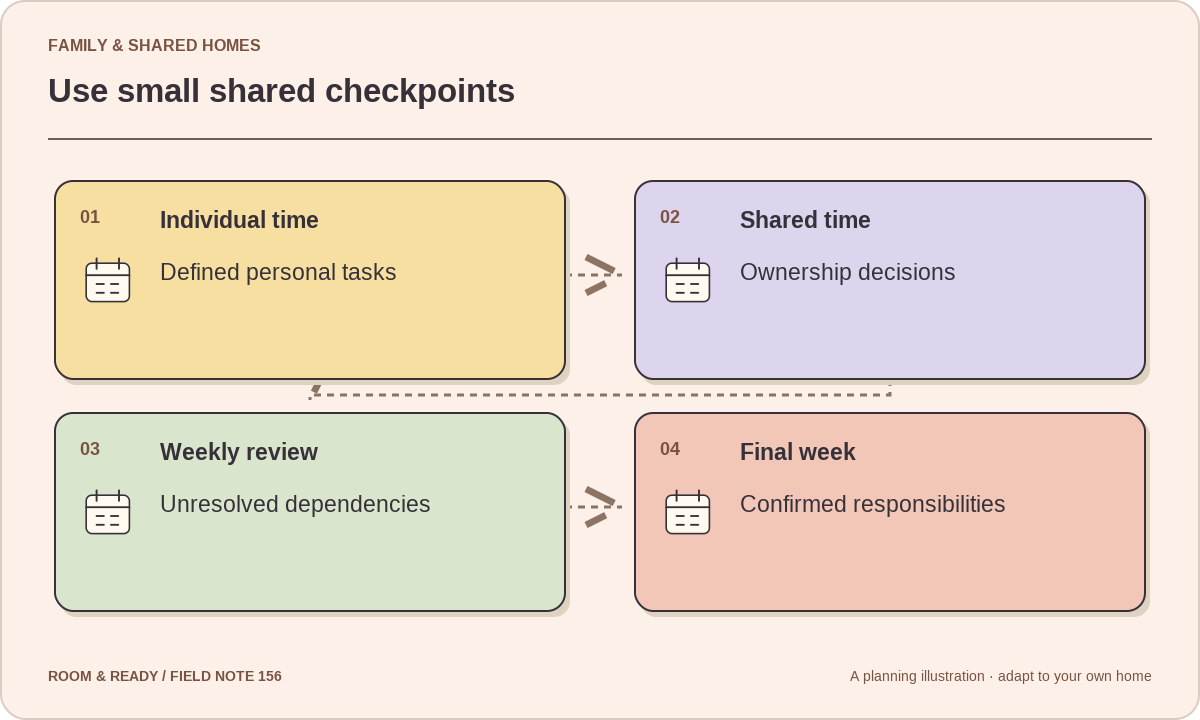

A busy household does not need everyone present for every packing task. Separate individual work from decisions that require agreement. Use a few planned checkpoints so progress remains visible without turning the whole month into constant moving discussions.
Divide by meaningful ownership
Give each person their own belongings and assign shared categories explicitly. A task such as pack the kitchen needs an owner or a smaller division; otherwise everyone may assume someone else has started. Record dependencies where one person cannot proceed until another answers.
Keep updates short
Use a shared list with completed tasks, open questions and the next session's priorities. Do not duplicate the same list across several message threads. Mark unfinished cartons so someone working later does not treat them as ready for loading.
Use shared time for decisions
Save joint sessions for furniture choices, shared purchases and the final access plan. Individual sorting can happen separately. During the last week, confirm who is available at each address and who handles daily household needs. The schedule should make coordination easier without requiring everyone to work at the same pace.