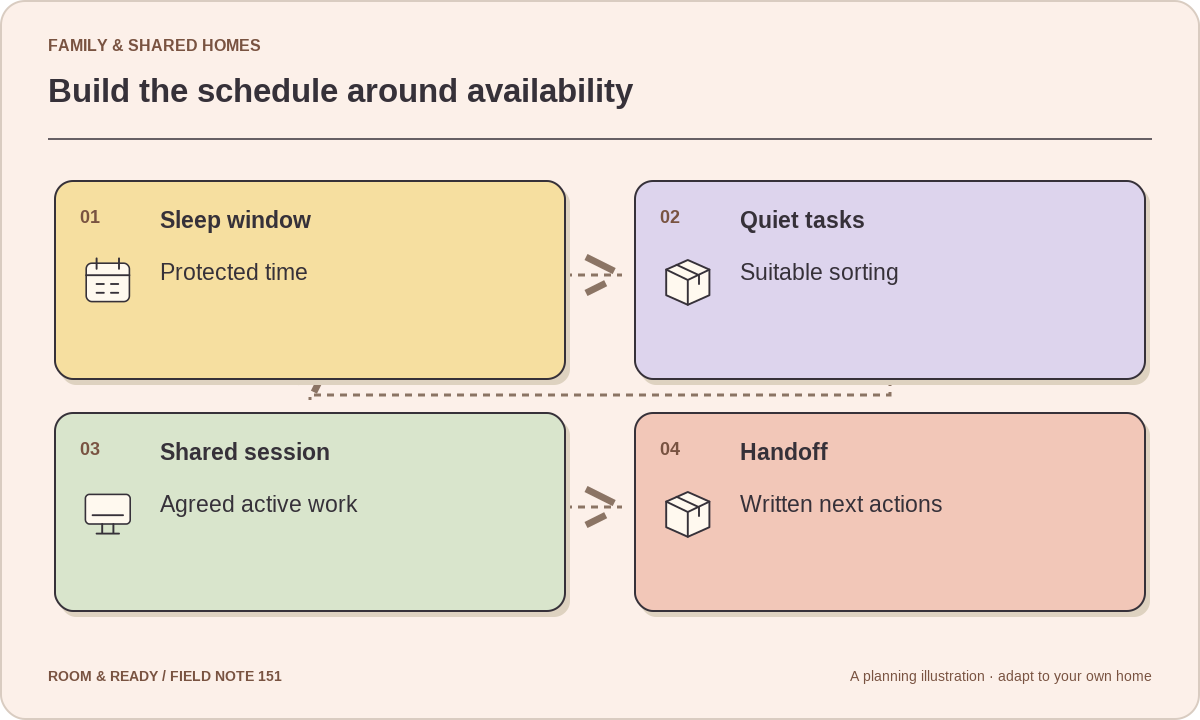

Shift work changes when a household can pack, receive deliveries and make decisions together. Put sleep and work commitments on the schedule before adding moving tasks. Agree which activities can happen quietly and which need a shared active period.
Separate noise from decision work
Sorting a small document group may be possible when furniture dismantling is not. Choose tasks appropriate to the time and keep tools or heavy handling within agreed windows. Do not assume that being at home means someone is available to supervise a delivery.
Use written handoffs
Leave a short note explaining what is finished, what remains open and which boxes should not be moved yet. Keep the current schedule in one place so a person returning from work does not rely on an outdated conversation.
Protect the transition day
Arrange a receiving person whose availability matches the confirmed delivery window. Keep work clothing, food and ordinary essentials accessible for the next shift. If the schedule changes, update responsibilities directly. A useful moving plan respects the household's actual hours instead of trying to fit everyone into a conventional daytime timetable.