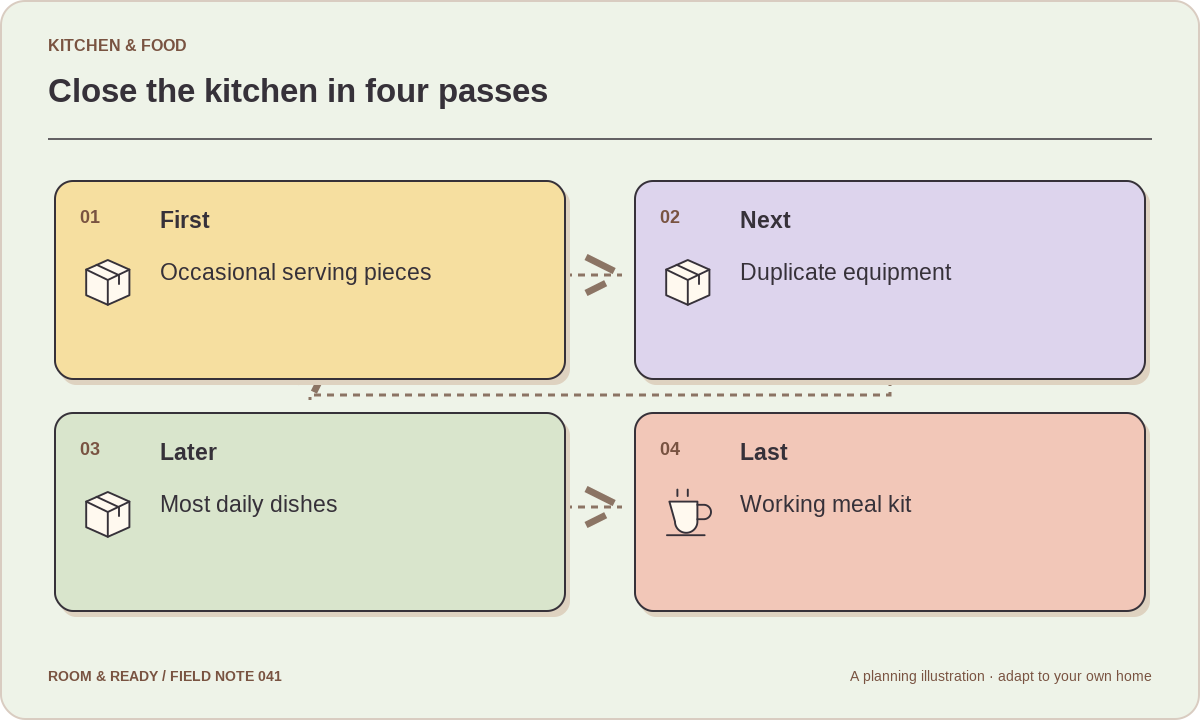

A kitchen can be almost packed and still support ordinary meals. The key is to keep a deliberately small working set while closing the cupboards you no longer need. Start with your final week's menu so the packing order follows the way you actually cook.
Remove the occasional-use layer
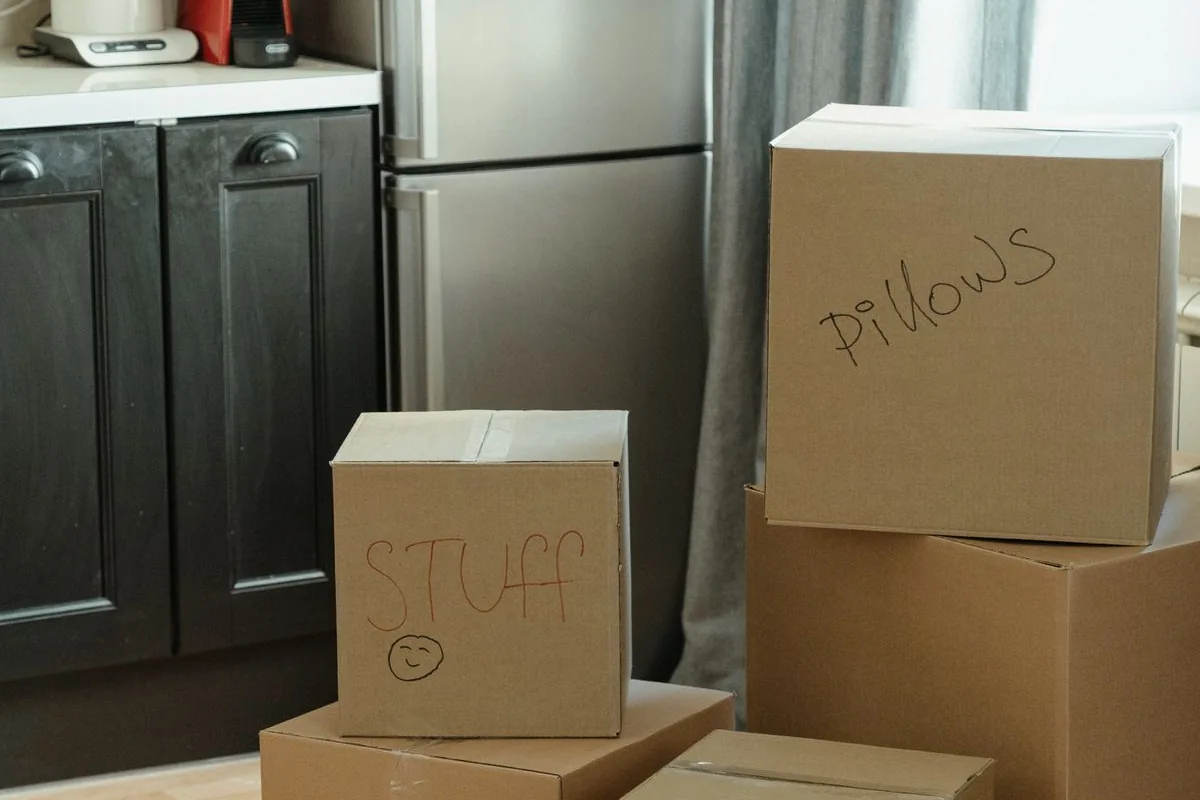
Pack special serving dishes, spare glasses and equipment you will not use before departure. Label each group by its future cupboard or function. Check high shelves and the backs of drawers before considering a section finished, and keep items awaiting a decision outside the sealed-box area.
Reduce daily equipment gradually
Retain one practical set of dishes and the utensils needed for the remaining meals. Put this set together on an accessible shelf. Avoid leaving a different essential item in every cupboard; the final packing session should gather one coherent kit.
Close the working set last
After the final meal, wash and dry the retained pieces before packing. Keep damp cleaning cloths separate. For example, one pan, two plates and a breakfast mug can share a final kitchen plan without forcing you to reopen the serving-dish carton. At the new home, unpack that functional group before organizing decorative or seasonal pieces.