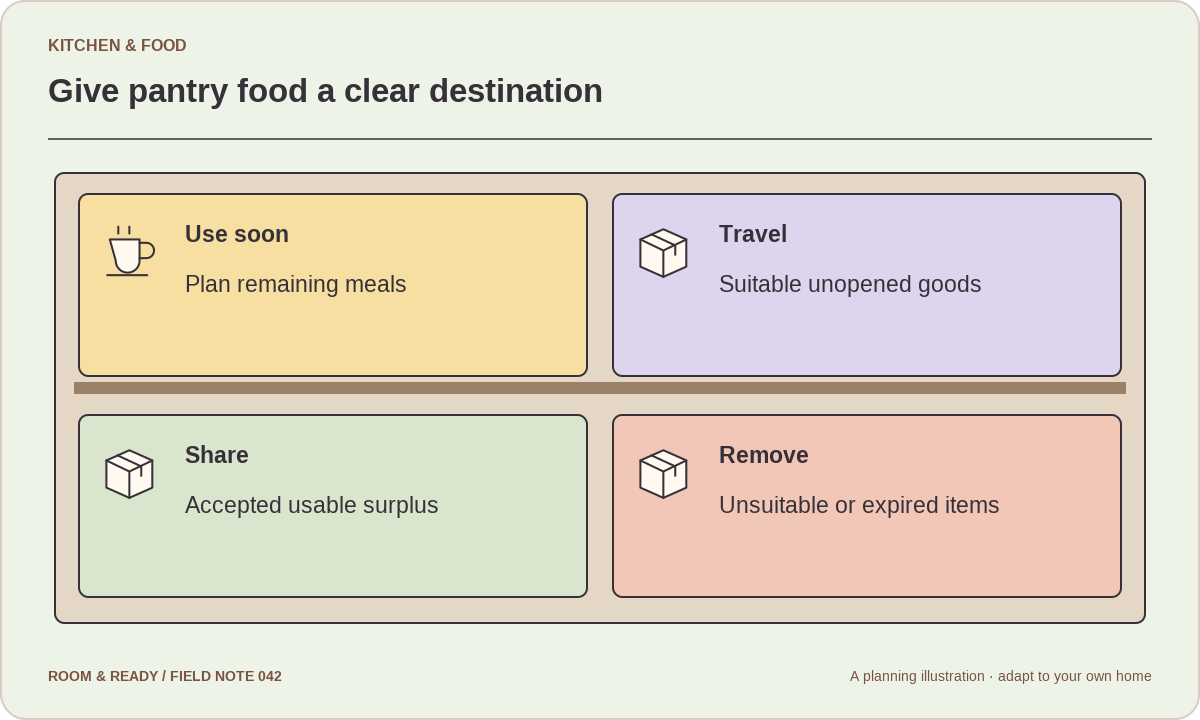

A pantry audit can reduce both packing and unnecessary shopping. Work shelf by shelf and check the actual condition and labeling of each product. Moving is a good time to make a practical plan, but it does not change food storage requirements or make an unsuitable product usable.
Inspect before grouping
Check packaging for damage and read the relevant date and storage information. Keep products in identifiable containers. Do not combine unlabeled ingredients simply to save space, because someone unpacking later may not know what they are or how they should be stored.
Pack by use and weight
Group suitable dry goods in manageable cartons and protect items that could spill. Separate dense tins from light packets so a single box does not become awkward. Keep a small first-meal group accessible instead of packing every breakfast ingredient deep in the main load.
Adjust the shopping list
Use the audit to plan meals from appropriate open ingredients before departure. If you have more than you can use or transport, arrange an accepted destination while there is time. Recheck the remaining pantry on the final morning, including the shelf that holds snacks or tea outside the main kitchen cupboards.