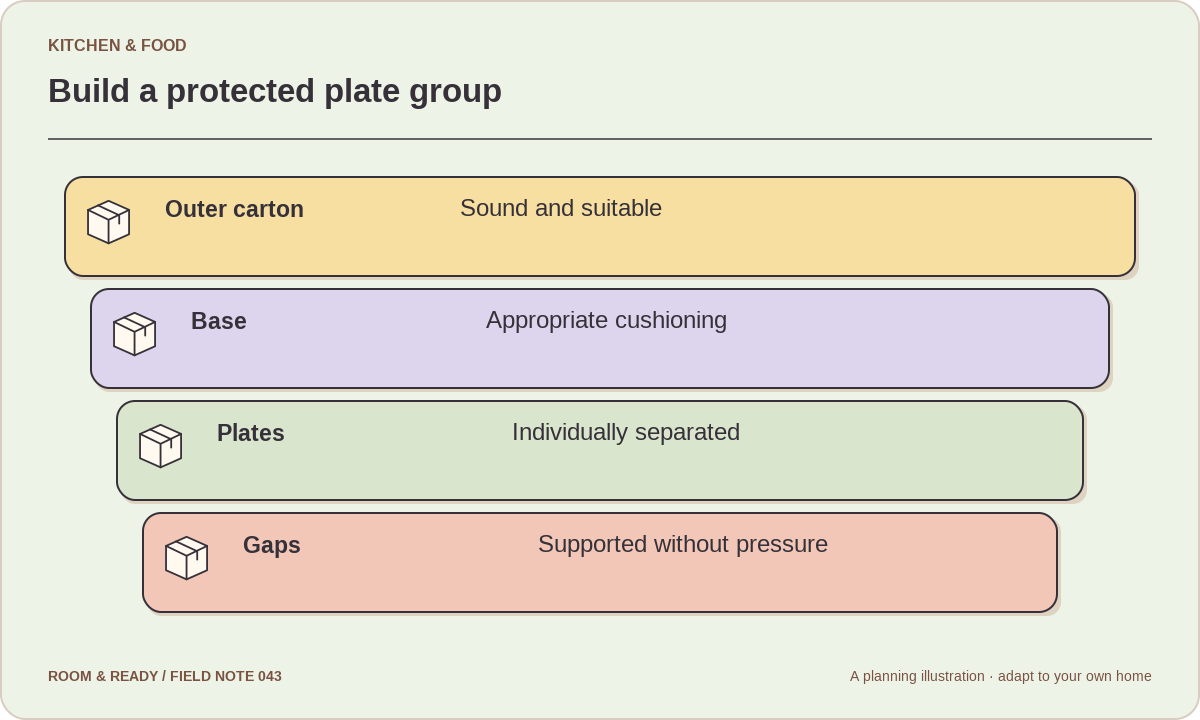
Plates need protection from both direct contact and movement inside the carton. Their size, material and condition affect the right packing method. Use packaging appropriate to the dishes, and ask your mover about any requirements for fragile goods before beginning a large collection.
Prepare a small group
Wash and dry the plates, then inspect them for existing chips or cracks. Select a carton that allows protective material without forcing the dishes against the sides. Set aside a few everyday plates for the final meals and include them in the last kitchen kit.
Keep hard surfaces apart
Wrap or separate each plate using suitable clean material. Follow the packaging system's intended arrangement and support the group so it cannot slide freely. Avoid treating a stack of unseparated dishes as a single solid object; movement can concentrate contact at vulnerable edges.
Label the package precisely
Write the destination and contents, such as kitchen, dinner plates, rather than a generic fragile mark alone. Keep dense unrelated items out of the carton. At unpacking, work on a clear surface and remove protective layers deliberately so a small side plate is not accidentally carried away with the wrapping.