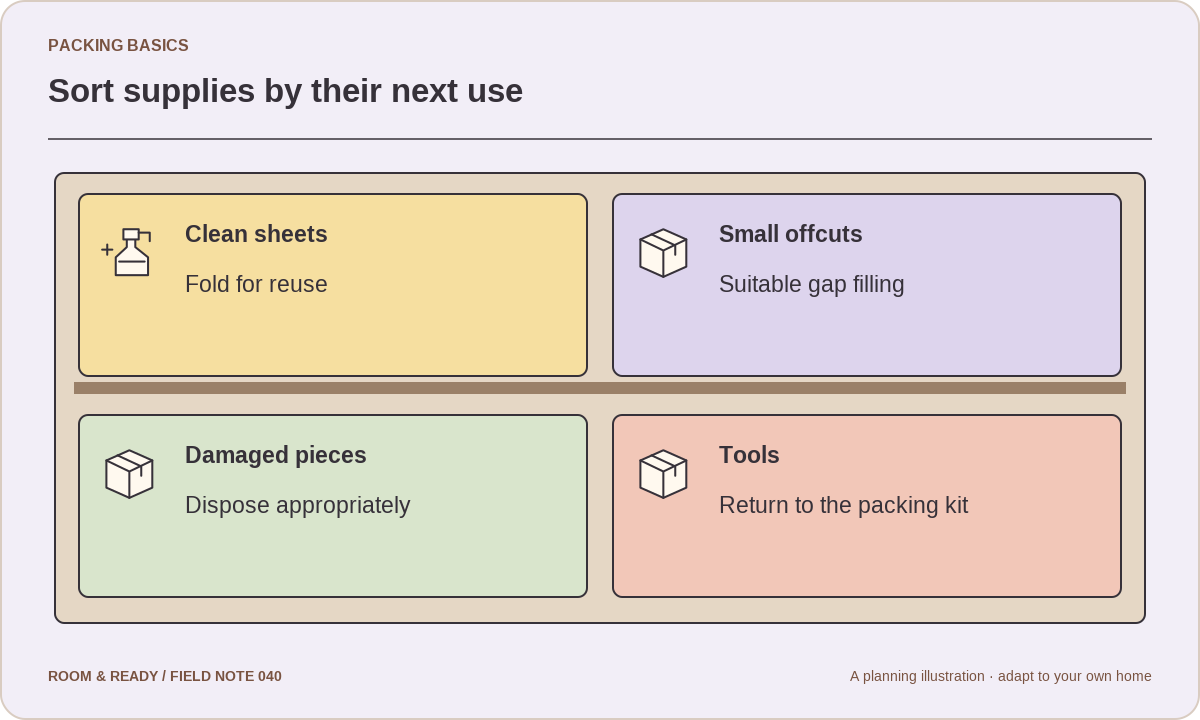

Loose wrapping and half-used tape rolls can make a room feel more chaotic than the belongings being packed. A simple materials reset keeps useful supplies visible and prevents clean paper from becoming mixed with rubbish. Do this at the end of a session rather than waiting for the whole room to be finished.
Separate usable material immediately
Fold clean sheets into one container and keep smaller suitable pieces in another. Discard contaminated or damaged material through the appropriate local route. Do not save every scrap if the resulting pile blocks access or makes it harder to find the material you actually need.
Keep tools with the station
Return tape, markers and cutting tools to their designated container. Count what remains before buying more. An apparently missing roll may simply be inside the carton you used as a temporary tray, while another room still holds a full supply kit.
Prepare for the next task
Choose the materials for the next category and leave them together. For example, set aside suitable cushioning for the remaining glassware rather than using it all on light textiles. A tidy material supply reduces interruptions and leaves the walking route clear between packing sessions.