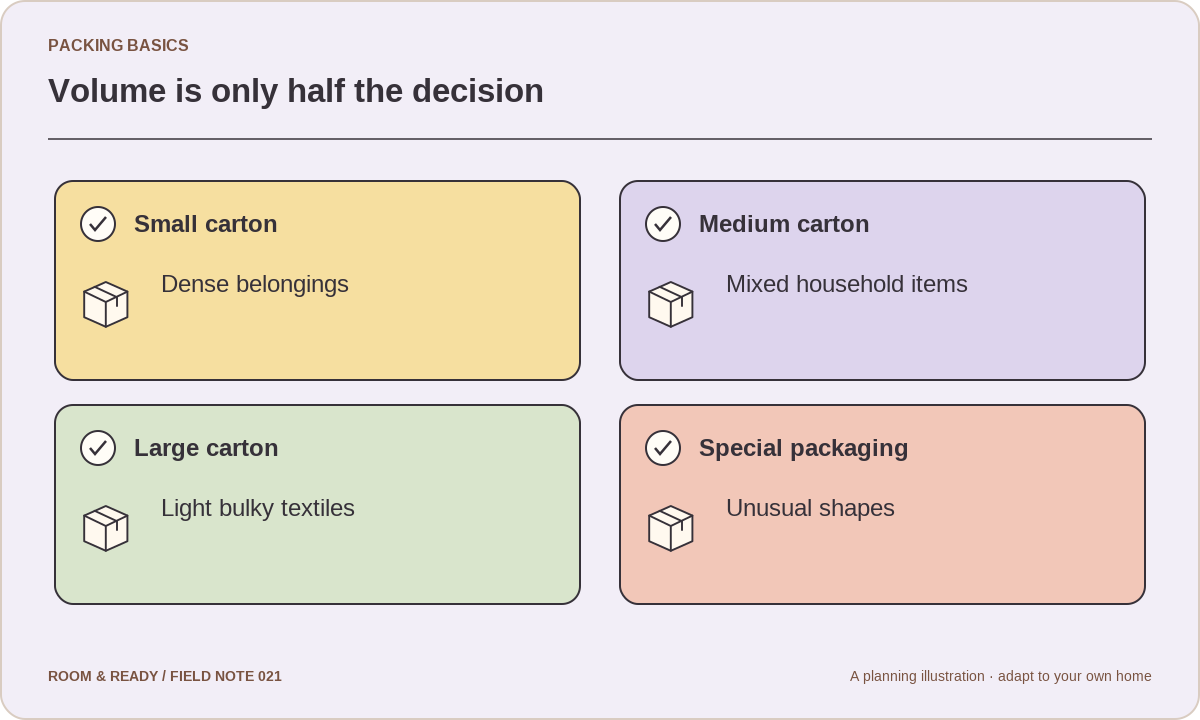

A large carton can look efficient while becoming awkward after only a few heavy objects. Choose packaging by the contents and by the people who will handle it. Books, bedding and a fragile lamp do not need the same container simply because they came from one room.
Start with density
Use smaller cartons for dense belongings and reserve larger ones for light, bulky goods. Check the carton manufacturer's limits and the requirements of your transport provider. A printed capacity is not a personal lifting target, and an old carton may no longer perform as it originally did.
Check the fit before wrapping everything
Place a representative item in the empty carton and allow room for protective material. Avoid forcing an object against the sides or choosing a container so oversized that it needs a large amount of loose filler. Unusual pieces may need purpose-made packaging or advice from the handler.
Test a partly filled carton
Pause before sealing to consider weight, balance and whether the contents can shift. Divide the load if it is awkward. Keep the destination room on the label, but let the item's shape and density determine the box itself.