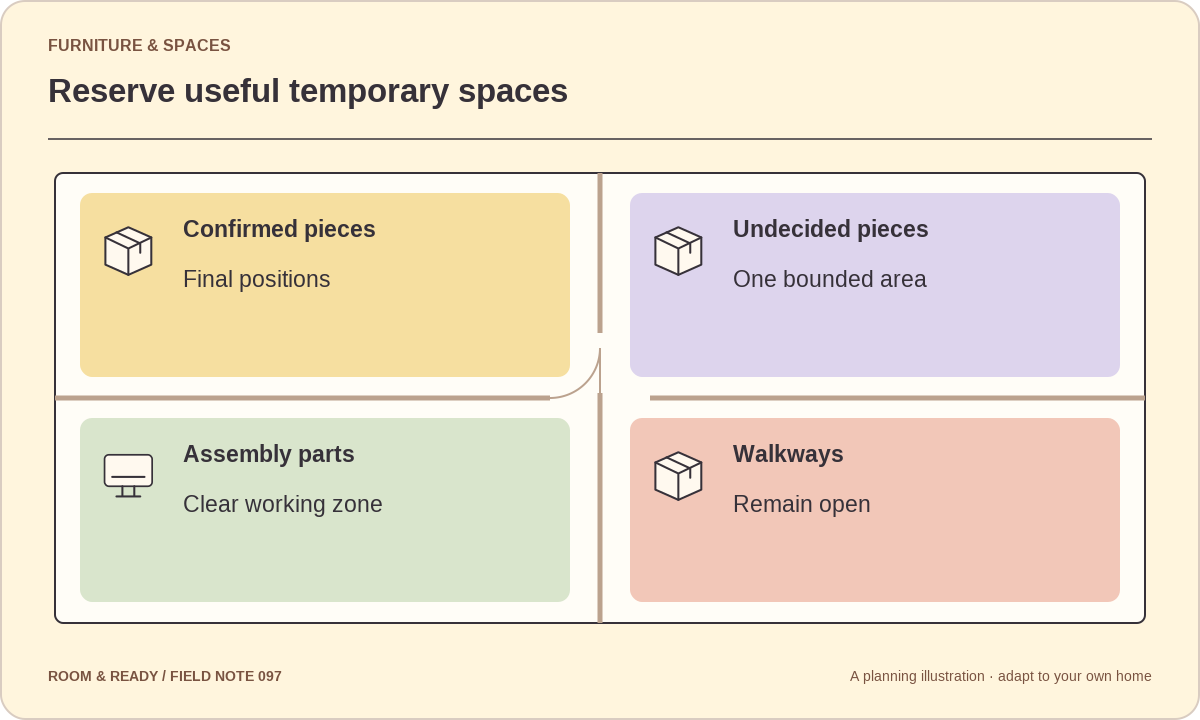

Not every furniture decision can be finalized before arrival. A temporary zone gives unresolved pieces a place without allowing them to spread through the house. Choose it carefully so it does not obstruct exits, essential rooms or the route used by the delivery team.
Decide what can wait
Separate furniture with a confirmed position from pieces needing a measurement or household decision. Give the receiving lead a short list. Large items should not be repeatedly moved around simply because several people have different ideas about the layout.
Mark the boundary
Use a sketch or removable notes to show where temporary items may stand. Leave enough room for safe movement and follow any relevant building requirements. Keep assembly components together in a different working area so they are not mistaken for spare furniture.
Set a review time
For example, decide on the spare side table after the sofa and main walkway are in place. Give the temporary zone a short review schedule rather than letting it become permanent overflow. Once a piece has a final position, update the plan and clear the vacated area before adding another unresolved item.