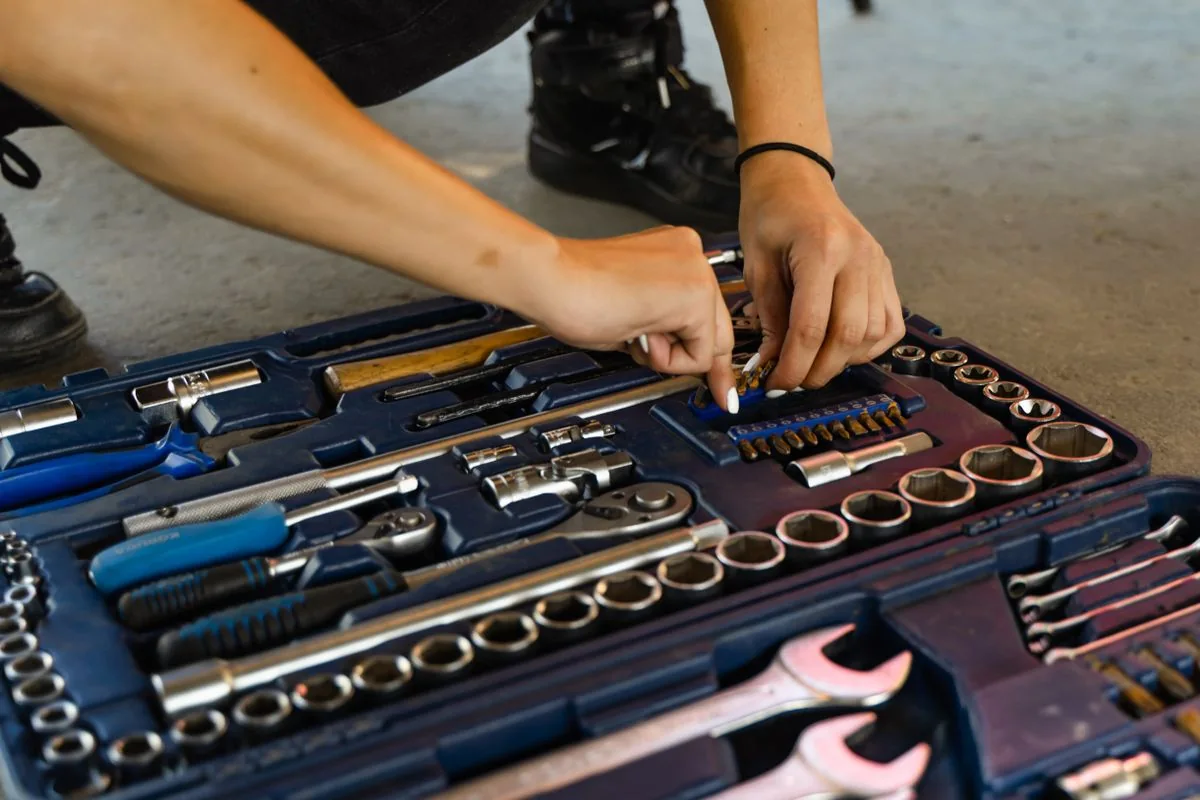

An assembly toolkit is most useful when it matches the furniture waiting at the destination. Review the relevant manuals and prepare the required tools before packing the general utility cupboard. Keep the kit accessible, but store sharp or powered equipment safely according to its instructions.
Read the rebuild requirements
List the pieces you intend to assemble and the tools each requires. Check whether any specialist equipment or professional help is needed. Do not assume one generic tool will suit every fitting, particularly where using the wrong size could damage a connection.
Keep tools and parts distinct
Place tools in their own secure container and keep furniture hardware in labeled groups. Include the manuals or a reliable way to access them. If several people share the kit, agree where it returns between tasks so it does not disappear into an unrelated carton.
Plan a controlled work area
At arrival, clear space and follow the furniture instructions. Keep children and pets away from loose fittings and active assembly. Return unused parts to the correct group after each task. A small, complete toolkit supports orderly assembly better than a large mixed box whose essential bit is always somewhere at the bottom.