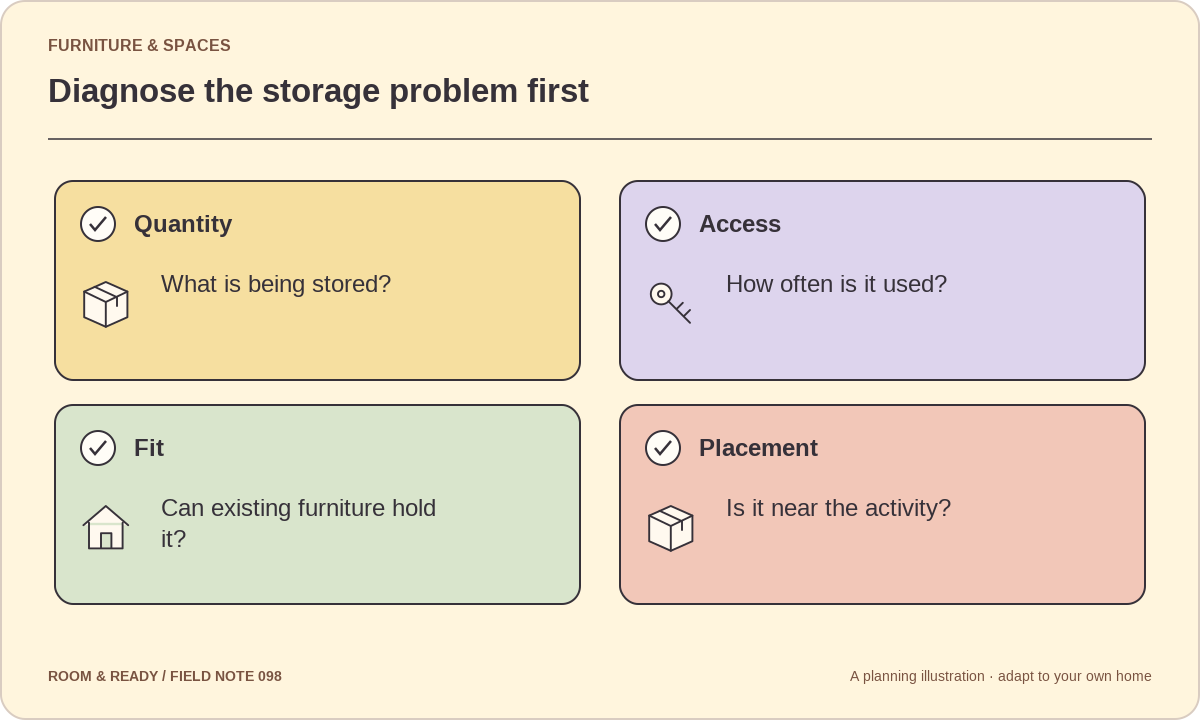

After moving, extra storage can feel like the quickest answer to unopened cartons. First check whether the problem is quantity, access or placement. An additional cabinet will not necessarily help if the items inside remain unrelated or the cabinet obstructs the room.
Unpack one category completely
Choose a manageable group such as desk supplies and see what you actually have. Remove belongings already assigned elsewhere and identify duplicates. Measure the available shelf or drawer before assuming that the category requires a new piece of furniture.
Try a temporary arrangement
Use suitable existing containers and furniture for several ordinary days. Place frequently used items near the activity they support. Notice whether the difficulty is finding things, reaching them or simply having more than the available space can comfortably hold.
Buy against a measured need
If another storage piece is justified, record the dimensions, opening clearance and intended contents before shopping. Check relevant load and installation requirements. Leave room for movement and retrieval rather than filling every empty wall. A successful purchase should solve a specific observed problem that remains after the temporary arrangement has been tested.