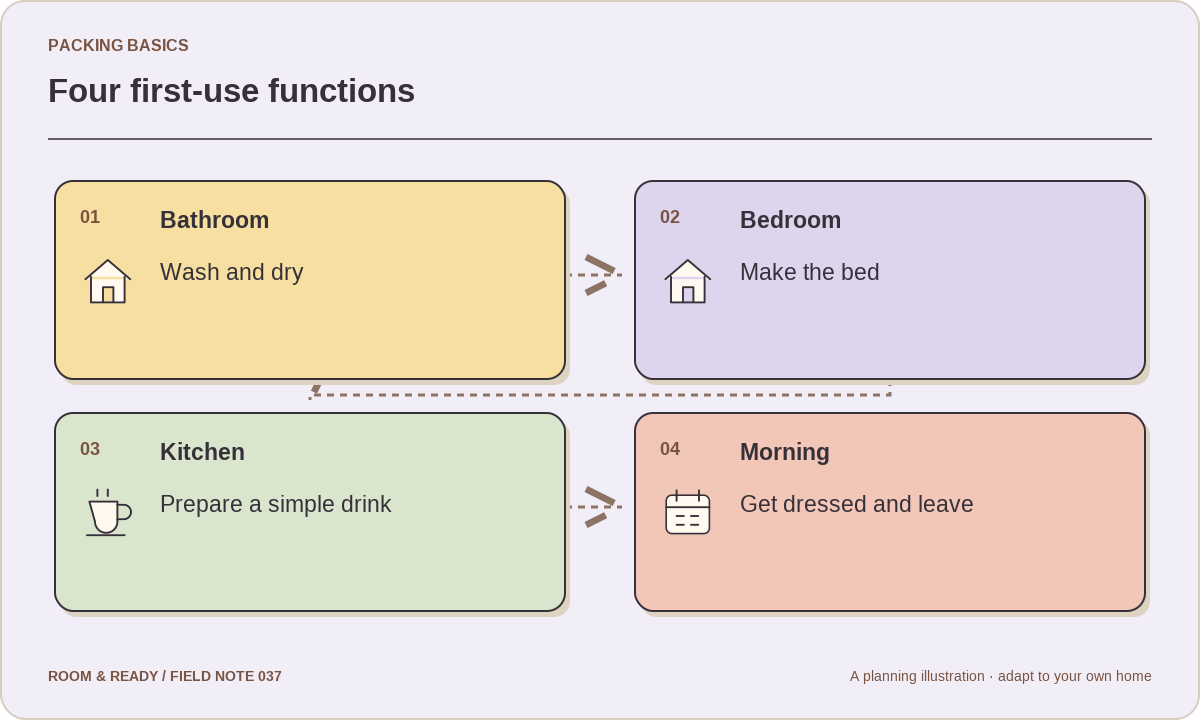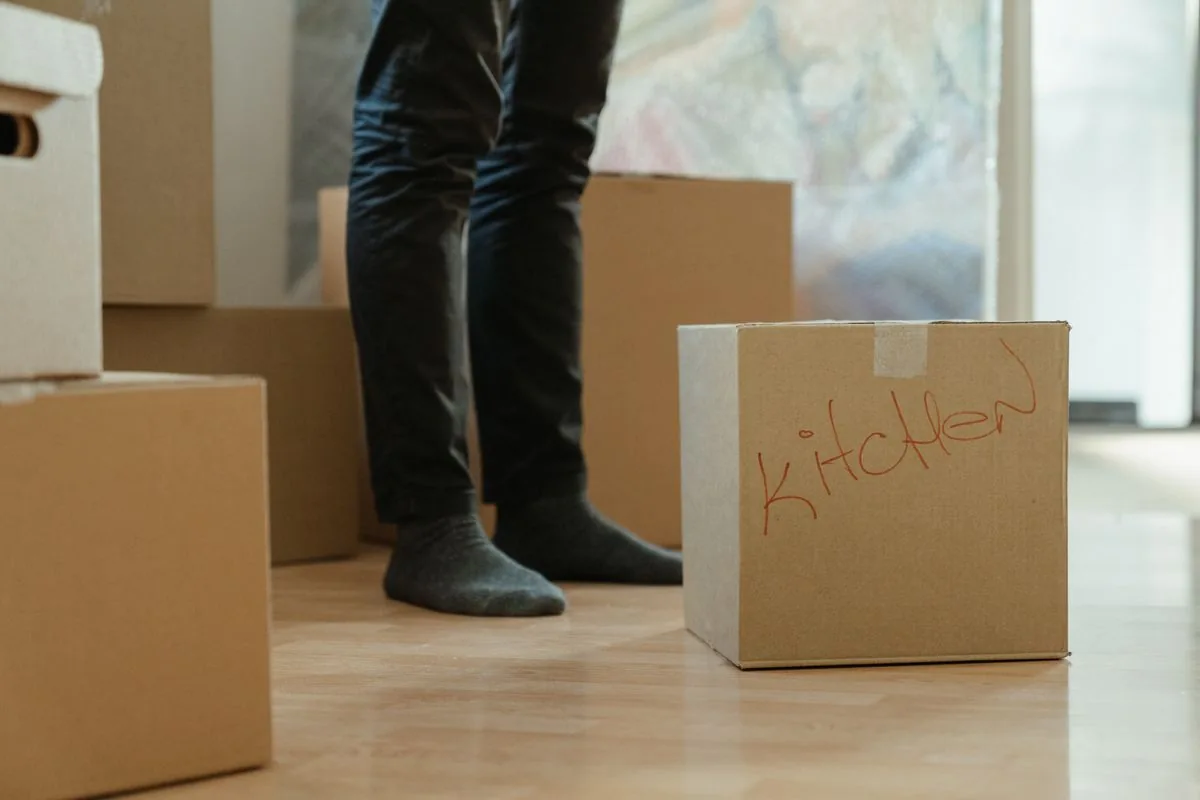

Open-first labels work best when they describe a function. A box marked urgent may contain decorations that felt important while packing, while the actual bed linen sits unnoticed. Decide what must be possible on arrival and build small, purposeful kits around those activities.
Start with the first evening
List the tasks your household expects to do before sleeping. Prepare the belongings needed for those tasks and keep them separate from items that can wait. Avoid filling a priority carton with heavy extras simply because there is room left inside.
Use a distinctive, readable label
Write both the destination and the function, such as bathroom, first wash kit. Include the identifier in your inventory and tell the receiving person which packages should remain accessible. Color can help recognition, but the words should explain the priority without a separate key.
Keep priorities limited
For example, bedding, basic toiletries and a simple breakfast kit may deserve early access, while the spare vase collection does not. Check the priority group the night before departure and add anything still in daily use. At arrival, open one functional kit at a time so the essential areas become usable quickly.