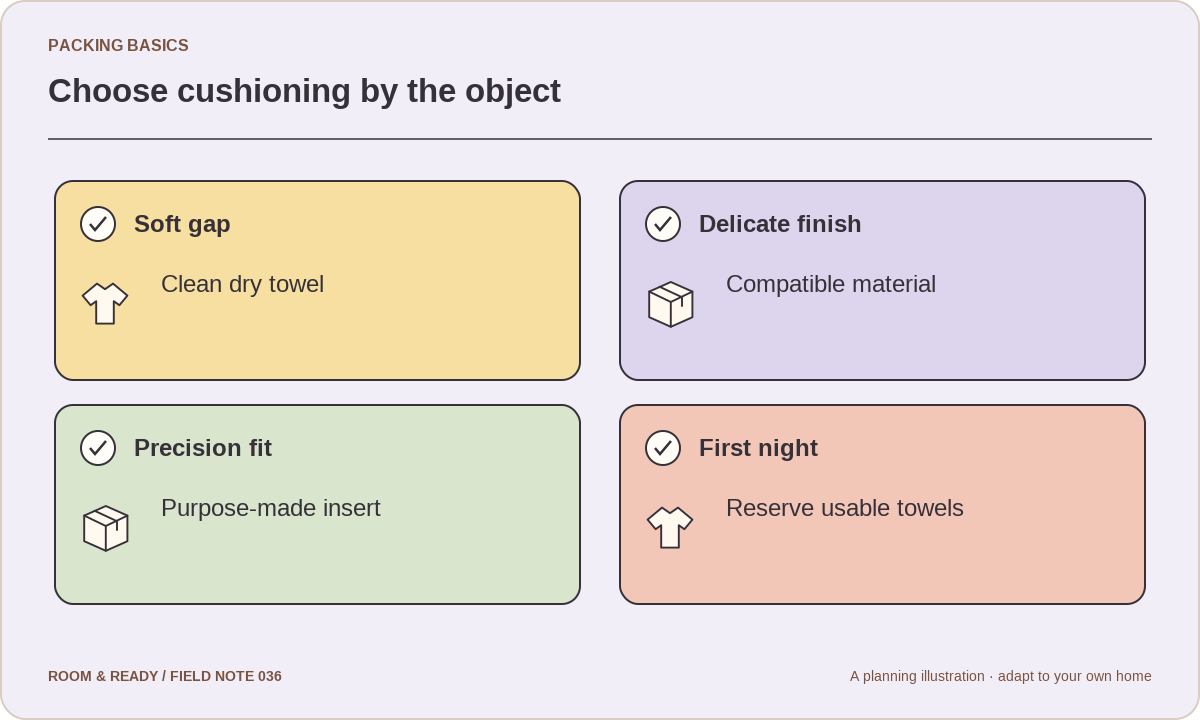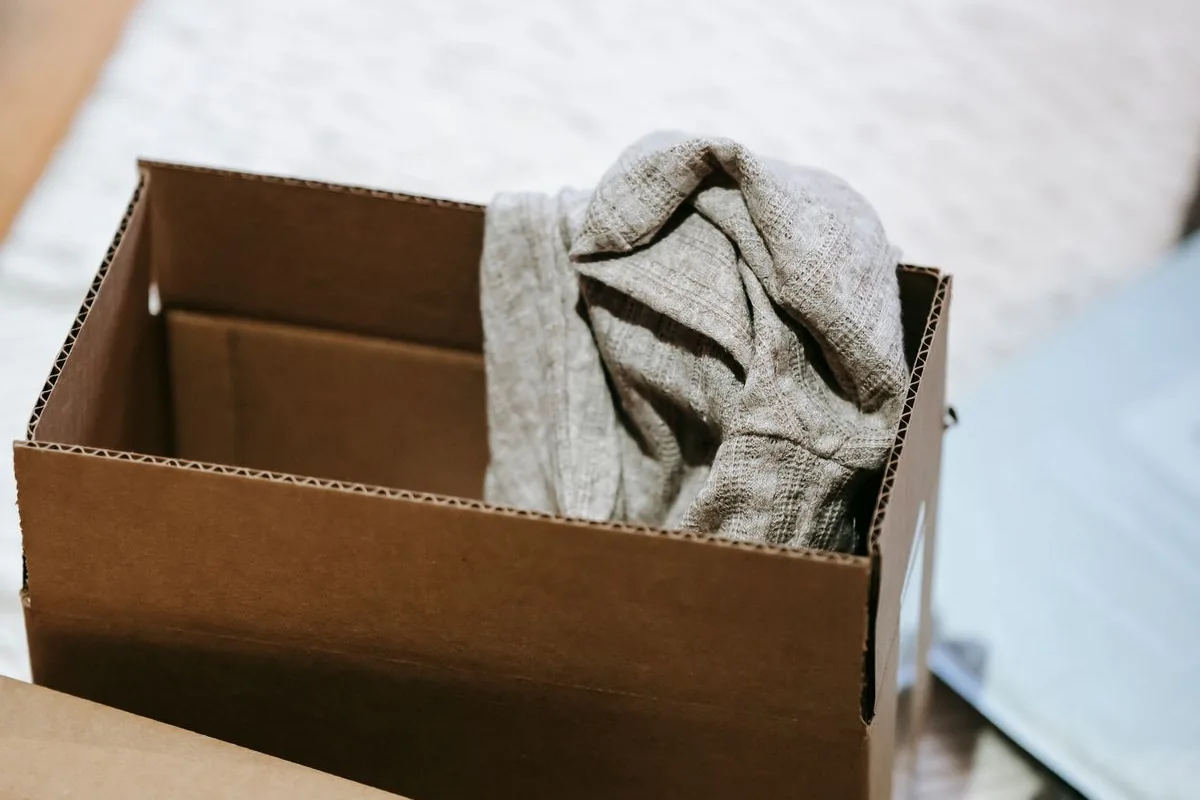
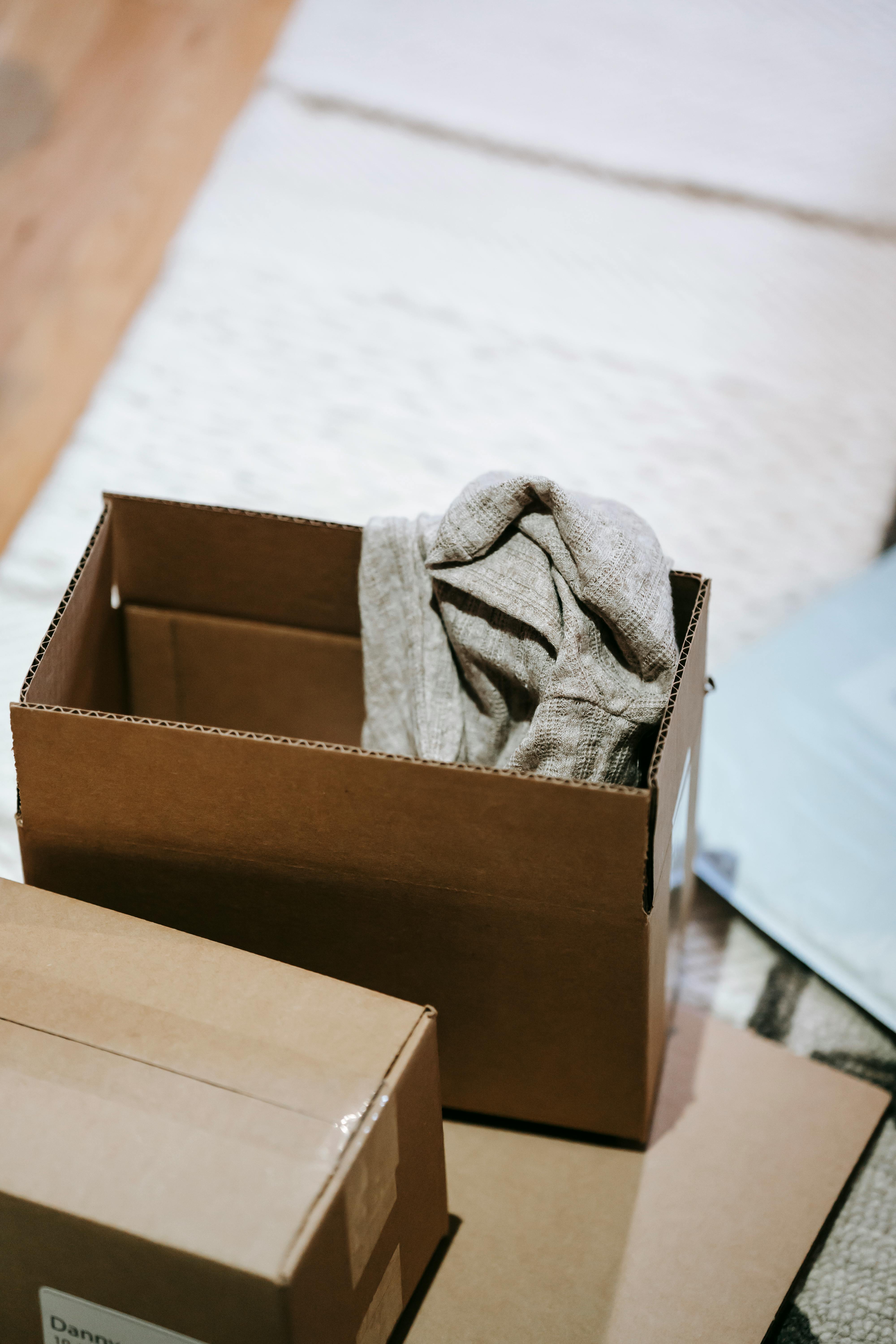
Towels can fill some soft gaps, but they are not universal protective packaging. Thickness, lint and seams may be unsuitable for particular surfaces. Decide based on the object you are protecting, and keep enough clean towels available for the household's first evening.
Match the material to the task
Use only clean, dry textiles. Check whether the object's finish needs a different protective layer or the manufacturer's original inserts. Do not assume a folded towel provides the same protection as packaging designed for electronics, glass or delicate artwork.
Keep the contents understandable
If a towel is used around a suitable household item, include it in the contents note. Otherwise, someone unpacking may pull the towel away without realizing another object is inside. Avoid building a mixed carton so complicated that unpacking becomes a search through layers of hidden belongings.
Plan for the textile afterward
Separate any towel that becomes dirty during transport from those intended for immediate use. For example, retain two bathroom towels in the arrival kit rather than using every towel as filler. Reusable material is helpful only when it protects the object and does not create a second shortage at the destination.