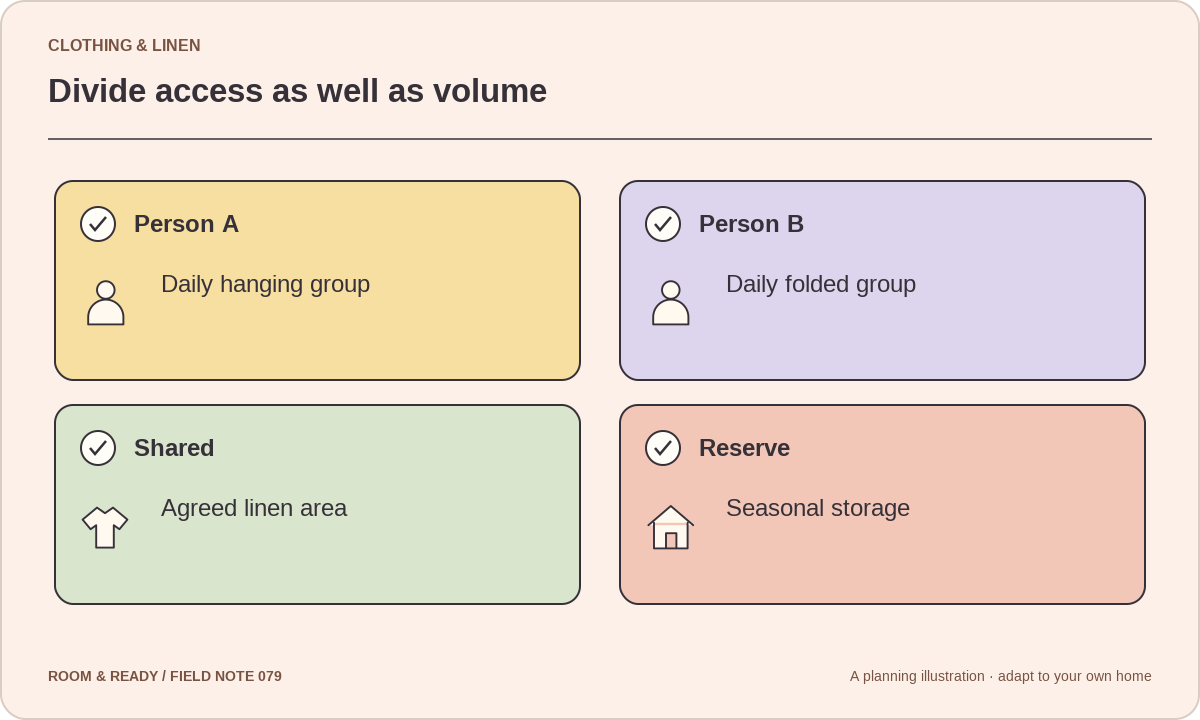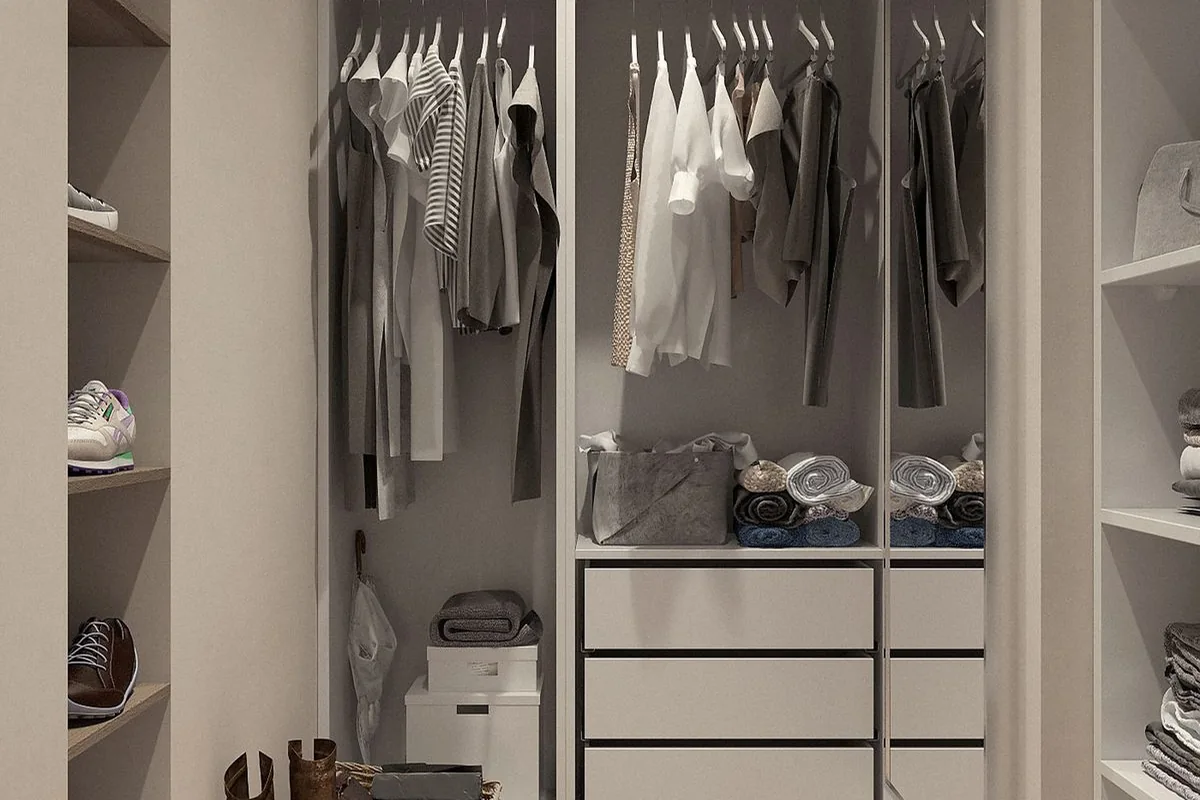
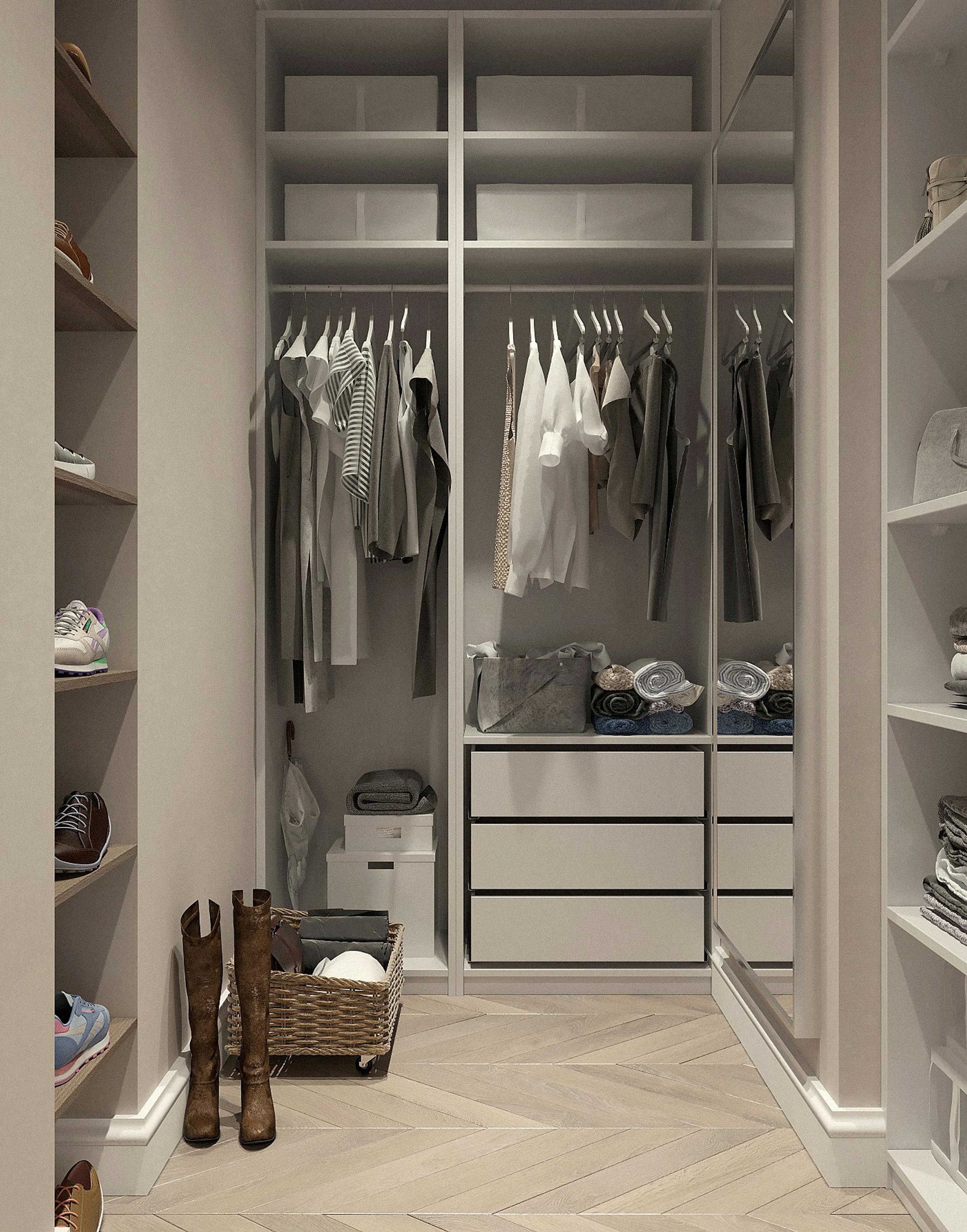
A shared wardrobe can become uneven simply because one person unpacks first. Agree on the main boundaries before either collection fills the available space. Consider hanging length, shelf access and drawer needs rather than dividing only by the number of visible compartments.
Compare actual routines
Discuss which garments need hanging, which can be folded and which are used every day. A person with more work shirts may need a different arrangement from someone with more folded clothing. Aim for an agreed allocation that reflects use and can be adjusted.
Mark temporary zones
Use removable notes or a simple sketch while unpacking. Keep each person's cartons grouped so belongings do not become interleaved on the floor. Reserve any shared section deliberately; an unclaimed shelf often becomes a miscellaneous area by default.
Review after normal use
After several ordinary mornings, notice whether either person has to move the other's items repeatedly. Adjust boundaries together rather than silently expanding into another zone. Leave enough space to retrieve containers and close doors. A successful shared arrangement remains understandable after laundry returns, not only on the day the wardrobe is first organized.