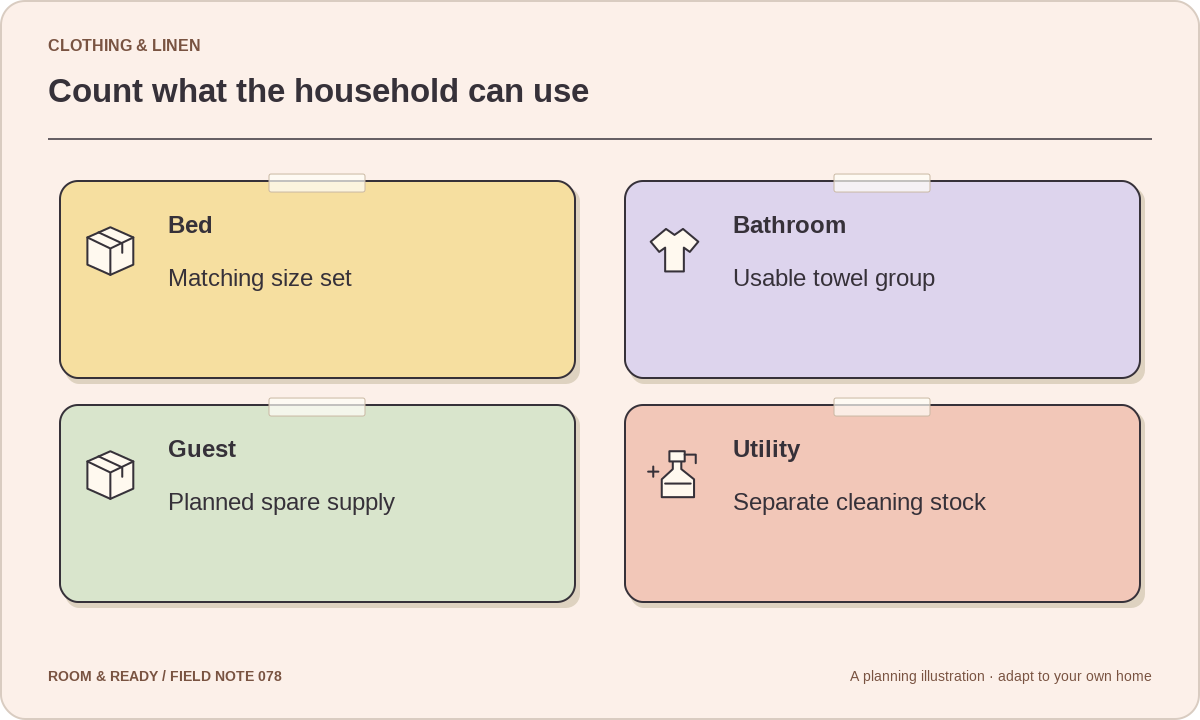

A linen inventory is most useful when it counts complete functions. Eight pillowcases do not necessarily mean you have a suitable set for every bed. Review the collection by size, condition and the number of sets your household realistically uses.
Match the pieces
Group sheets and covers by bed size, then check whether the pieces work together. Separate cleaning cloths from personal-use towels. Follow care guidance and remove items already assigned to another destination before recording the retained supply.
Distinguish current and spare use
Set aside the first-night bedding and daily towels so they are not counted as packed reserves. Record spare sets in simple terms, such as two single-bed sets, rather than listing every textile separately unless you need that detail.
Use the count to plan storage
Compare the retained supply with the new linen shelf or cupboard. Avoid buying more containers merely to preserve a quantity that does not match your use. At arrival, place one accessible spare set near each relevant routine and keep the rest clearly labeled. Update the inventory when items leave the household so it remains a practical reference rather than an old packing record.