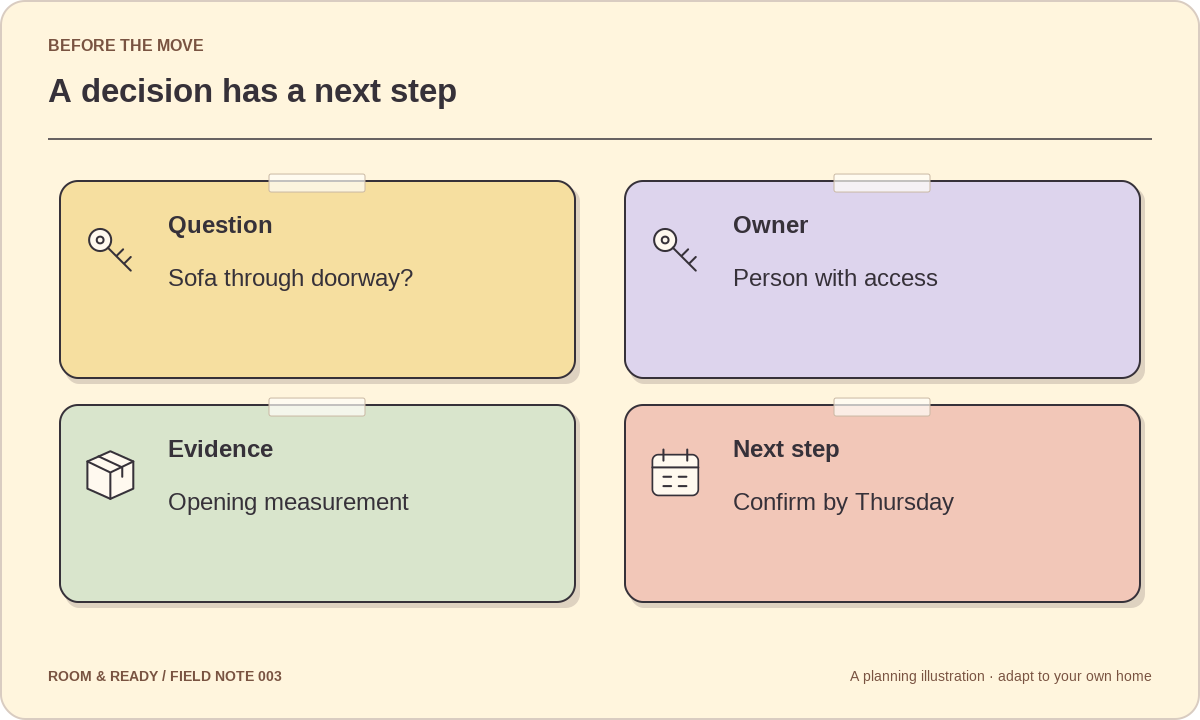

A moving notebook is most helpful when it records decisions, not every passing thought. Messages, screenshots and scraps of paper can each hold part of an answer. Bringing the current answer into one place prevents an outdated message from controlling the day.
Separate facts from questions
Create three sections: confirmed arrangements, unanswered questions and changes. Put contact details beside the arrangement they concern. A parking question belongs beside the loading plan, while a shelf measurement belongs beside the furniture decision. Avoid storing sensitive account passwords in a notebook that several helpers will see.
Record what changed
When an arrival window changes, cross out the old one and add the date of the update. Note who supplied the new information. Keep supporting emails available, but summarize the practical consequence in a sentence so you do not need to reread a long thread while standing outside.
Close decisions deliberately
Suppose you were choosing between taking a bookcase and donating it. Once the destination measurement rules it out, record the collection arrangement and remove it from the transport inventory. A completed decision should change the working plan, not remain as an unanswered question on a second list.