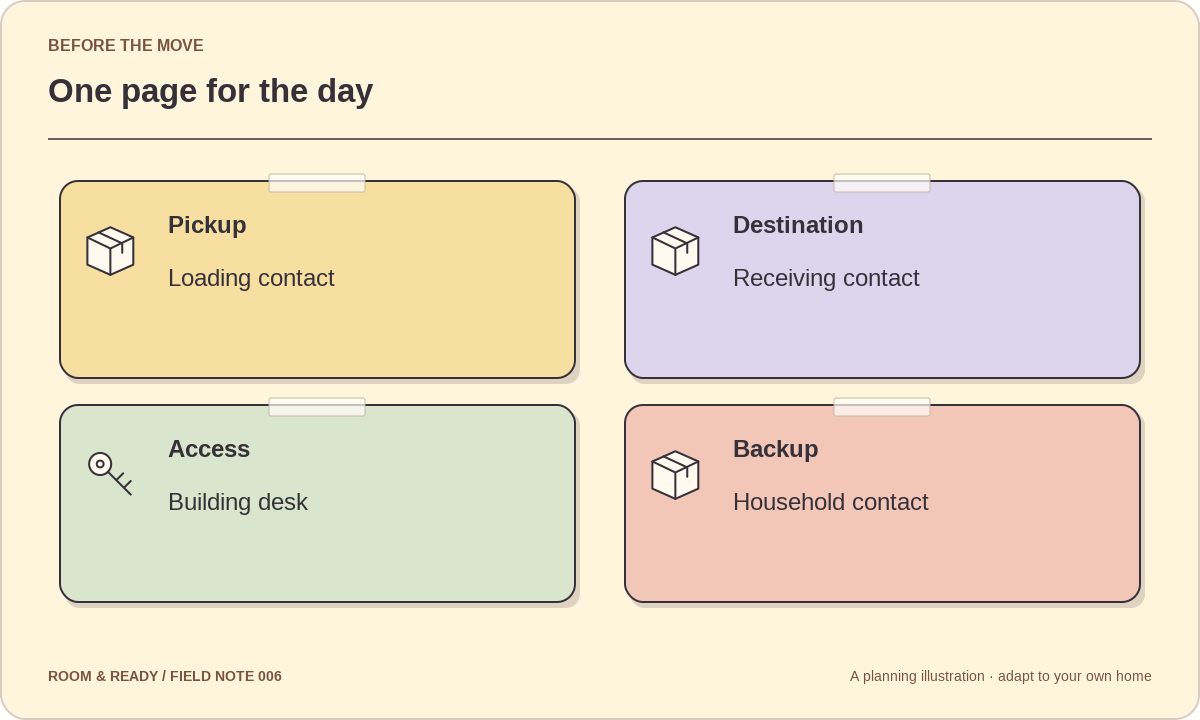

A contact sheet reduces the need to search messages when a driver is waiting or a door is locked. Its purpose is to connect a specific problem with the person who can solve it. Include only the details needed for the move and keep the sheet with your arrival bag.
Organize contacts by responsibility
Put the collection contact beside the pickup address and the receiving contact beside the destination. Add building access contacts if relevant. Record names as well as numbers: a saved number labeled only with a company name can be confusing when several people work there.
Add useful context
Write the agreed arrival window, the correct entrance and a backup contact for each location. Include a booking reference only if it helps identify the job. Do not publish door codes or personal phone numbers on boxes that may be left in public corridors.
Share a controlled version
Give helpers the part they need rather than your entire household directory. For example, the friend collecting keys needs the collection instructions and your number, but probably does not need account details. Keep a printed copy available and check the numbers once before the day. Replace the sheet if responsibility changes.