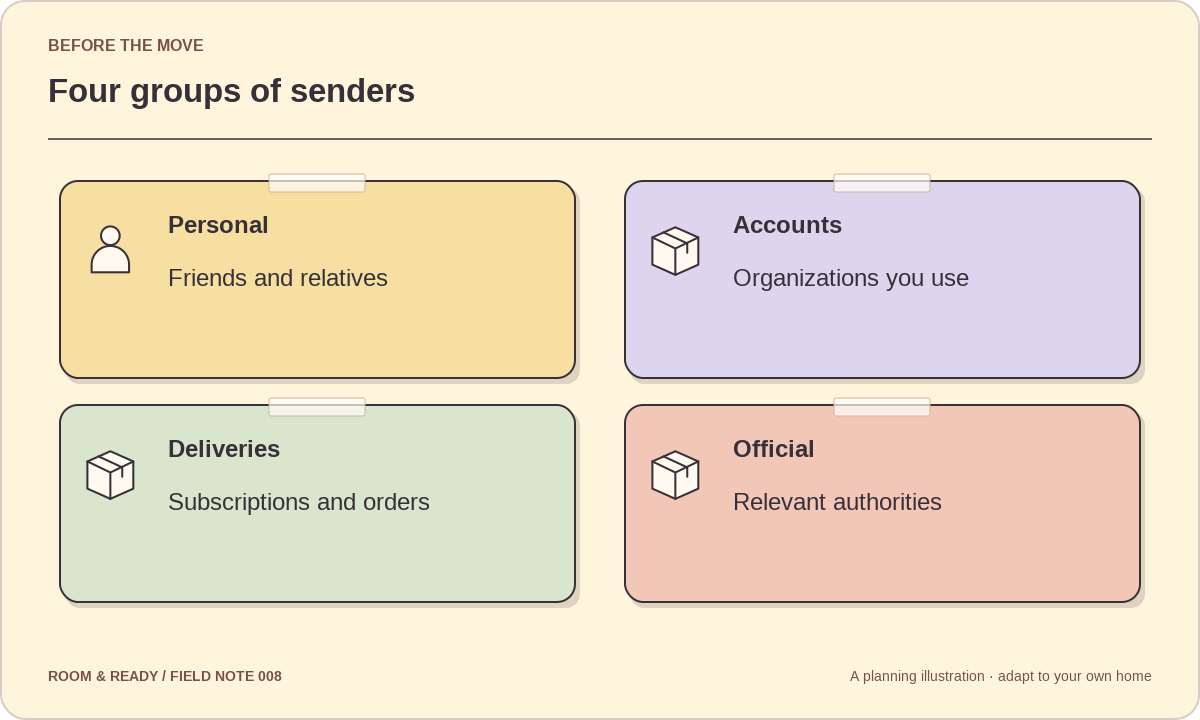

Mail forwarding and changing your address with individual senders are separate jobs. A tracker lets you see which organizations have the new details and which still need attention. Begin with the services you actually use instead of copying a long generic list that may not fit your household.
Find your regular senders
Review recent mail, subscriptions and saved delivery addresses. Group them by importance and by the date of the next expected communication. Use each organization's official process. Keep sensitive identity information out of a tracker that you intend to share with helpers.
Record a visible finish point
Use columns for organization, action date and confirmation. A submitted form is not always the end of the process, so note any required follow-up. Update saved shopping addresses before placing another order; changing your profile may not change an order already in progress.
Check the first weeks of mail
When correspondence reaches the old address, use it to identify a missed sender. In the United States, check current forwarding options directly with USPS. Do not assume that forwarding updates all of your accounts. Keep the tracker until the organizations that matter to you have confirmed the new address.