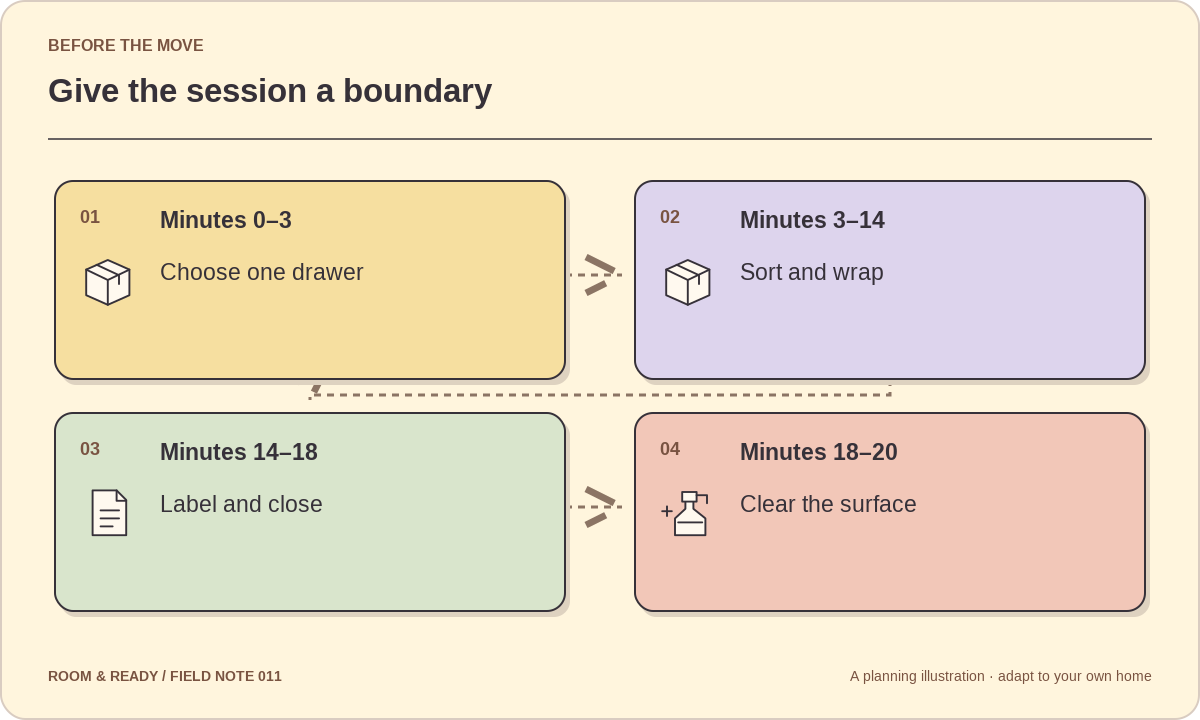

A short session works when its endpoint is small enough to finish. Emptying an entire wardrobe during a lunch break often creates a second problem for the evening. Choose one drawer, one shelf or one category with a clear boundary and keep the last few minutes for cleanup.
Define the result before starting
Write a specific result such as packing the spare table linen. Collect an appropriate box and the necessary wrapping first. If a decision depends on another person, set that item aside with a question instead of allowing it to consume the whole session.
Keep decisions simple
Separate what will travel from what already has another destination. Do not begin photographing sale items in the middle of packing unless that was the session's purpose. Different jobs require different tools and attention; switching repeatedly makes a small task feel unfinished.
Close the session properly
Label the box while you remember its contents, record it if using an inventory and return unused supplies. If time runs out, leave a precise note such as three scarves still to pack. The next session can then resume directly rather than reconstructing what the previous pile meant.