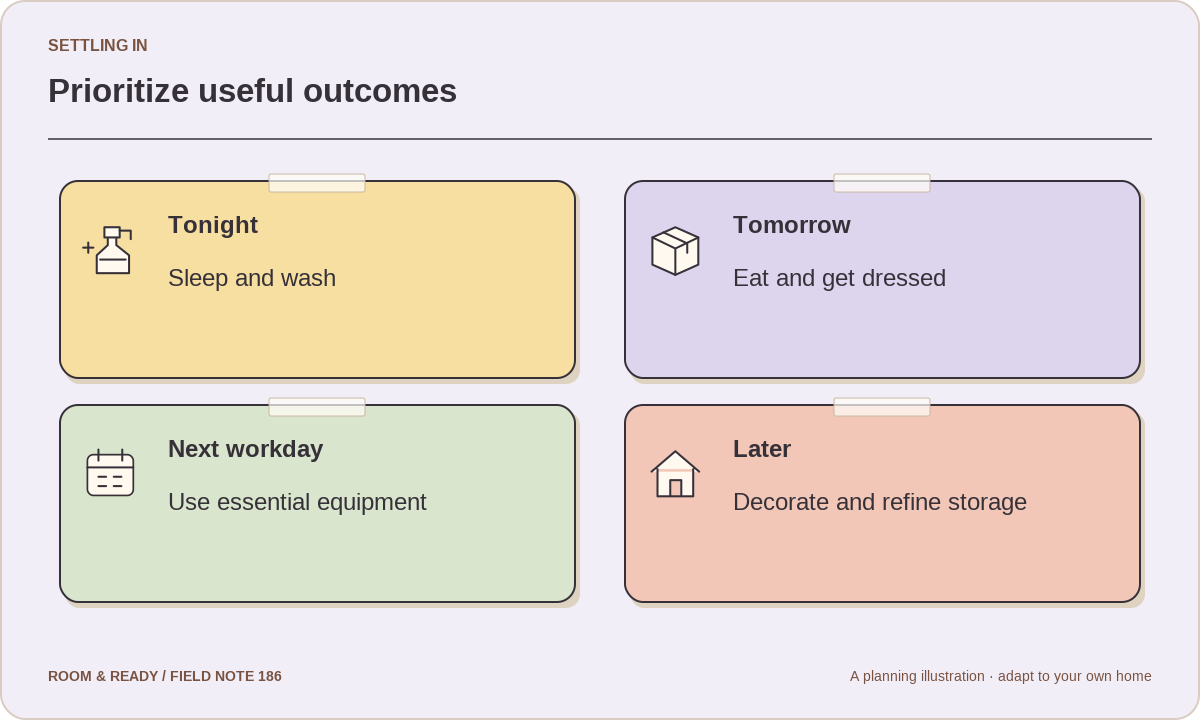

An unpacking priority list should describe outcomes, not just rooms. Finish bedroom can mean anything from making a bed to arranging a bookshelf. Name the next activity you need to enable, then identify the cartons and furniture required for it.
Start with the calendar
Look at the first evening, the following morning and the next fixed commitment. Work or school may change which belongings need early access. Keep confirmed appointments visible and avoid letting optional decorating consume the time reserved for essential setup.
Break a large room into functions
In the kitchen, a meal-preparation area may come before the baking cupboard. In a bedroom, the current clothing drawer may come before seasonal storage. Give each task a clear finish so you can stop without feeling that the whole room remains unfinished.
Review after each session
Update the priorities when a missing part or delayed service changes the plan. Keep unresolved questions tied to a person and next action. Leave low-priority cartons closed and labeled until their turn, rather than opening them early and creating a collection of decisions across the floor.