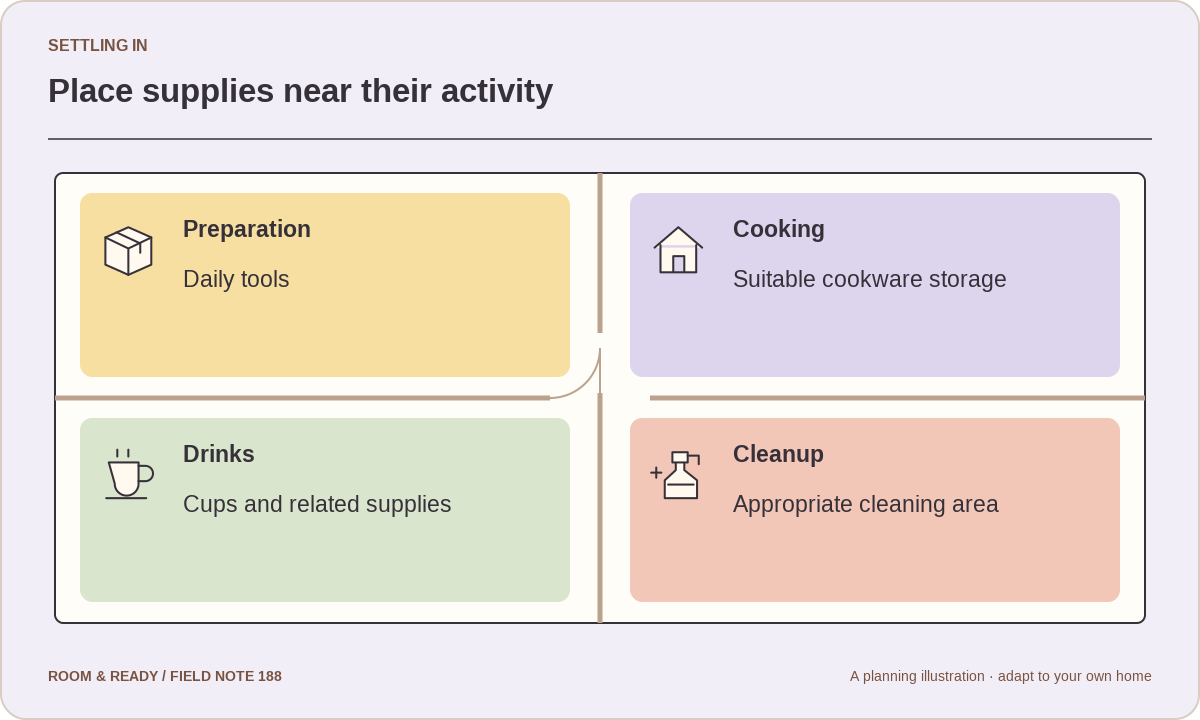
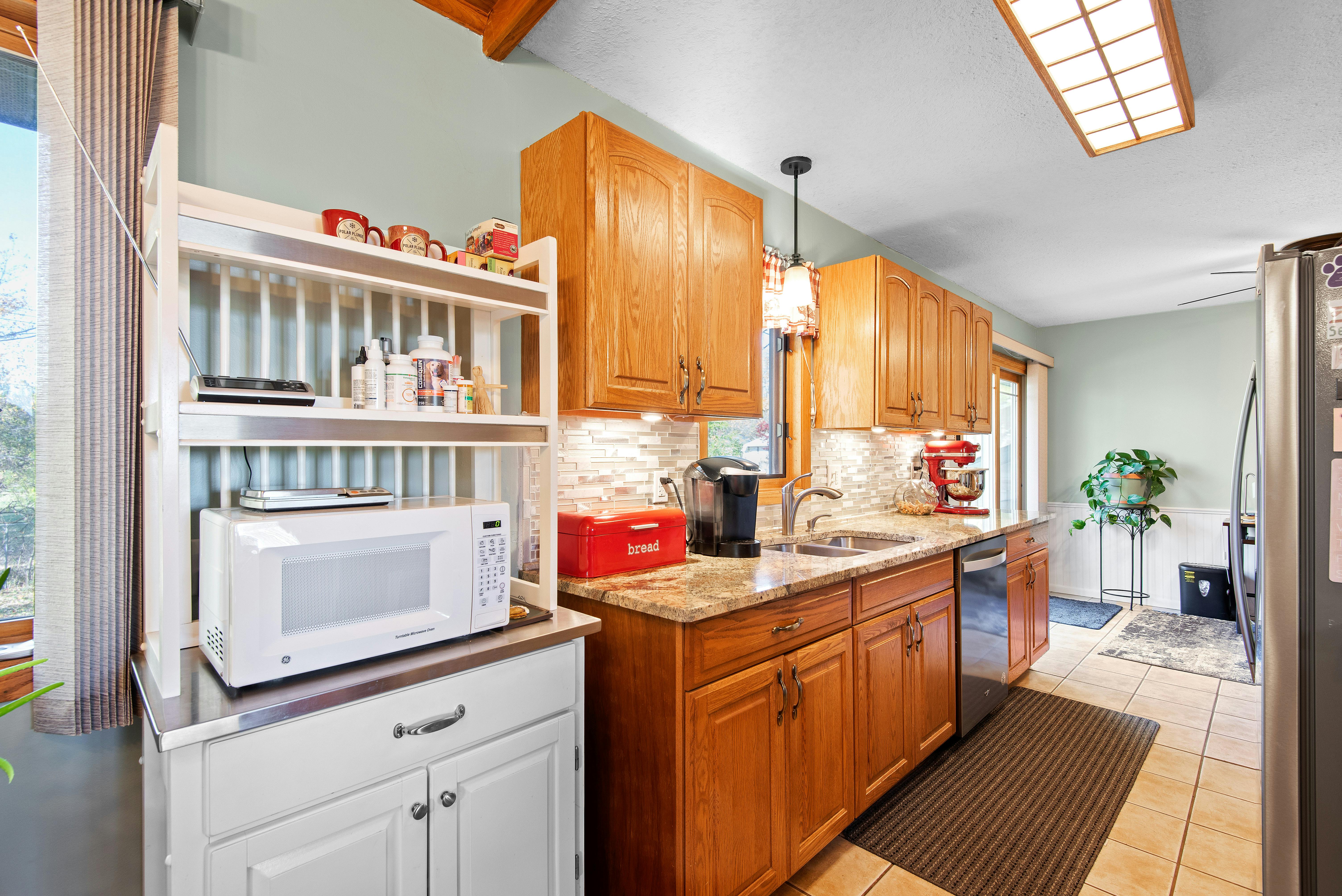
A new kitchen may offer different drawer depths, appliance positions and work surfaces from the old one. Unpack around activities rather than reproducing the previous cupboard map. Keep the first arrangement flexible until you have prepared and cleaned up several ordinary meals.
Place the daily groups first
Give frequently used utensils, dishes and cookware accessible positions near their relevant tasks, while respecting appliance and storage requirements. Keep food and cleaning products appropriately separated. Avoid using high or awkward storage for items you need repeatedly if a more suitable position exists.
Measure before adding organizers
Check drawer openings, shelf depth and the clearance needed to remove containers. Use existing suitable storage temporarily. A rack that looks tidy in a photograph may make your own cupboard harder to use if it blocks handles or hides labels.
Review the meal cycle
Notice where you walk back and forth or where dishes accumulate after washing. Adjust those locations first. Unpack occasional equipment after the daily layout works, giving each piece a specific home. The kitchen's organization should reduce repeated effort rather than simply make every cupboard appear equally full.