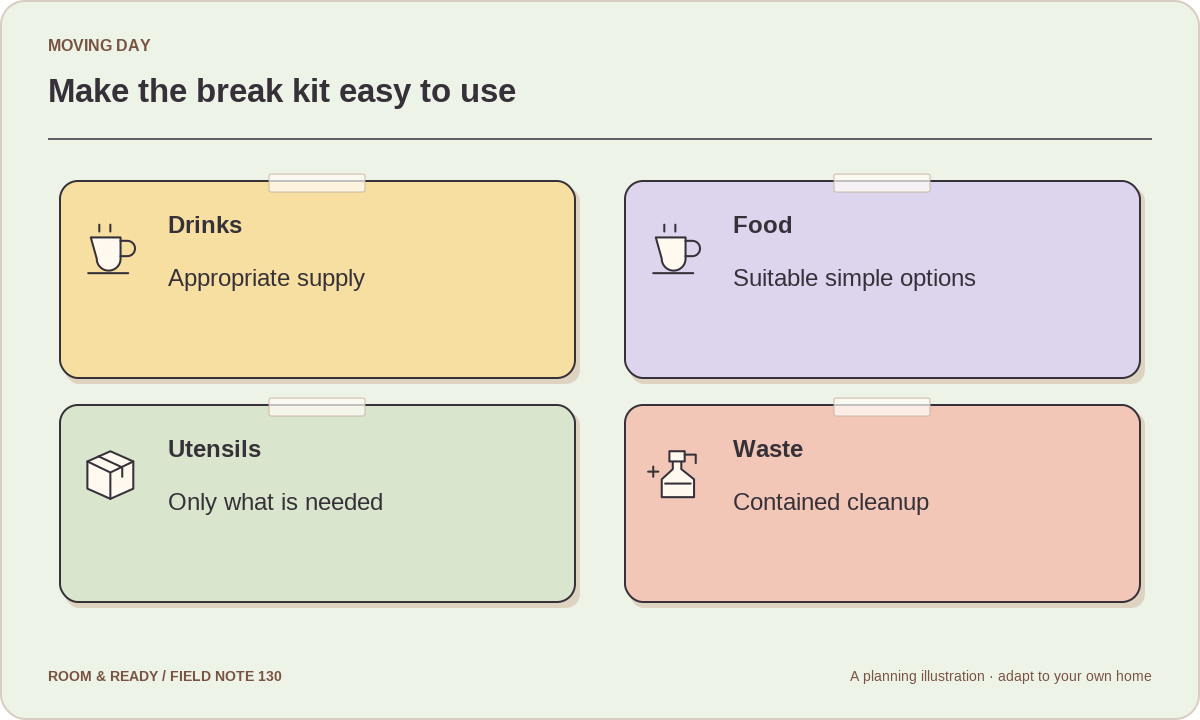

Meals are easy to overlook when the kitchen is partly packed and helpers arrive at different times. Plan simple food and drinks around the facilities that will actually be available. Follow ordinary food storage guidance and account for the preferences or dietary needs of the people involved.
Choose low-complexity options
Select food that can be handled appropriately during the day's schedule and does not depend on unpacked cookware. Keep perishable items under suitable conditions. Avoid assuming a disconnected refrigerator or an ordinary moving carton will meet those needs.
Keep the kit out of the loading pile
Use a clearly identified personal or arrival container for the suitable supplies, cups and other essentials. Store it where the household coordinator can find it. Keep it separate from cleaning products and packing debris.
Agree on a break point
Choose a natural pause in the schedule rather than relying on everyone to notice hunger at the same time. Clear a small place to sit or stand comfortably without blocking the route. Collect waste promptly and leave the working areas usable. The food plan should support the day without becoming another large preparation task.