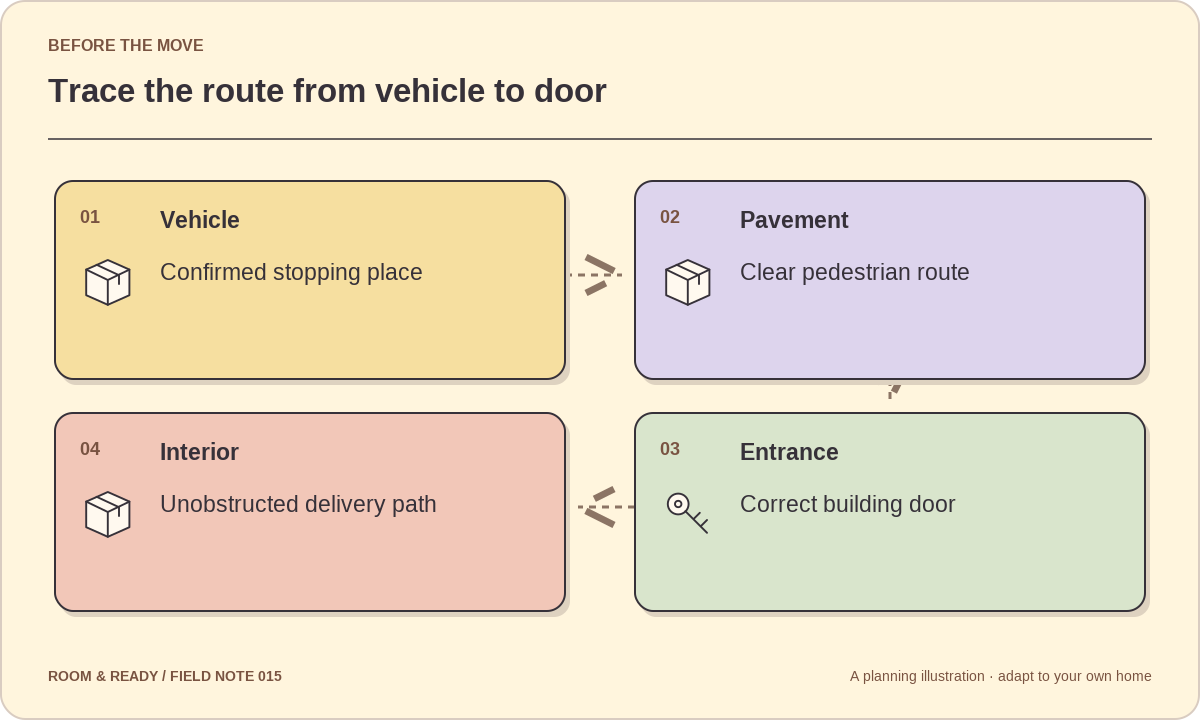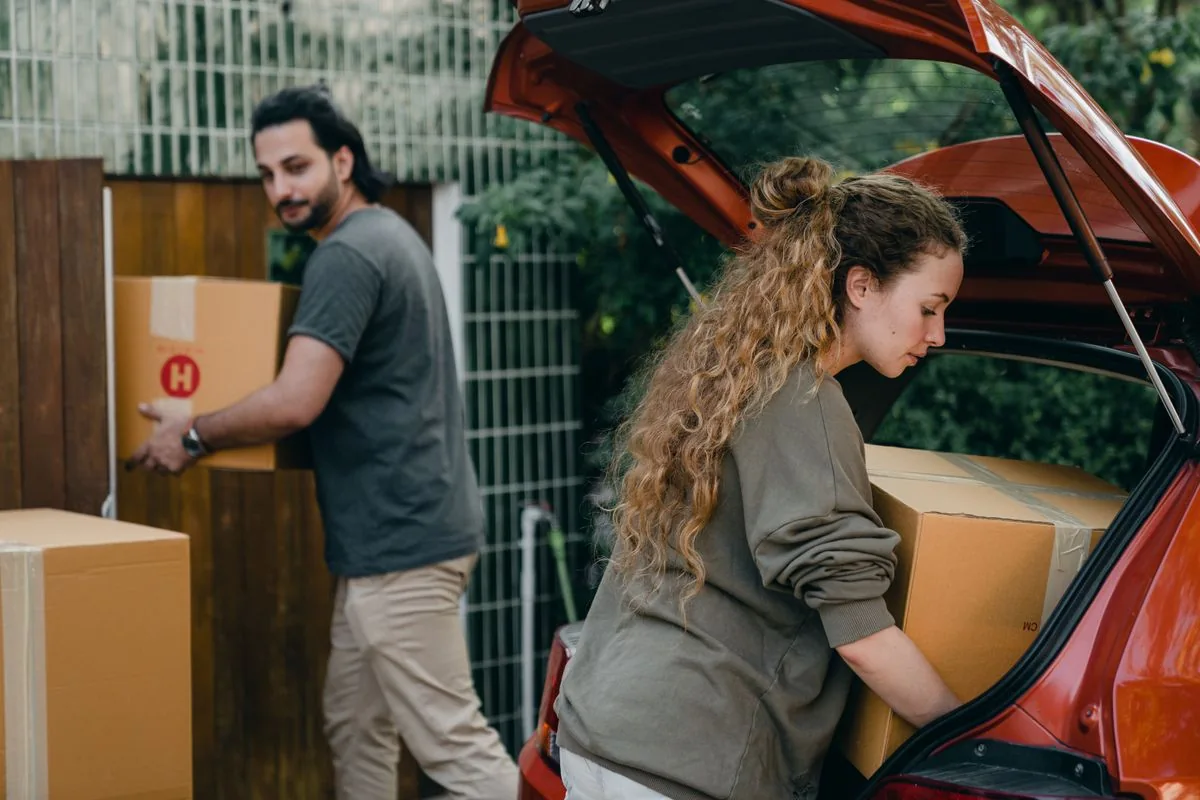
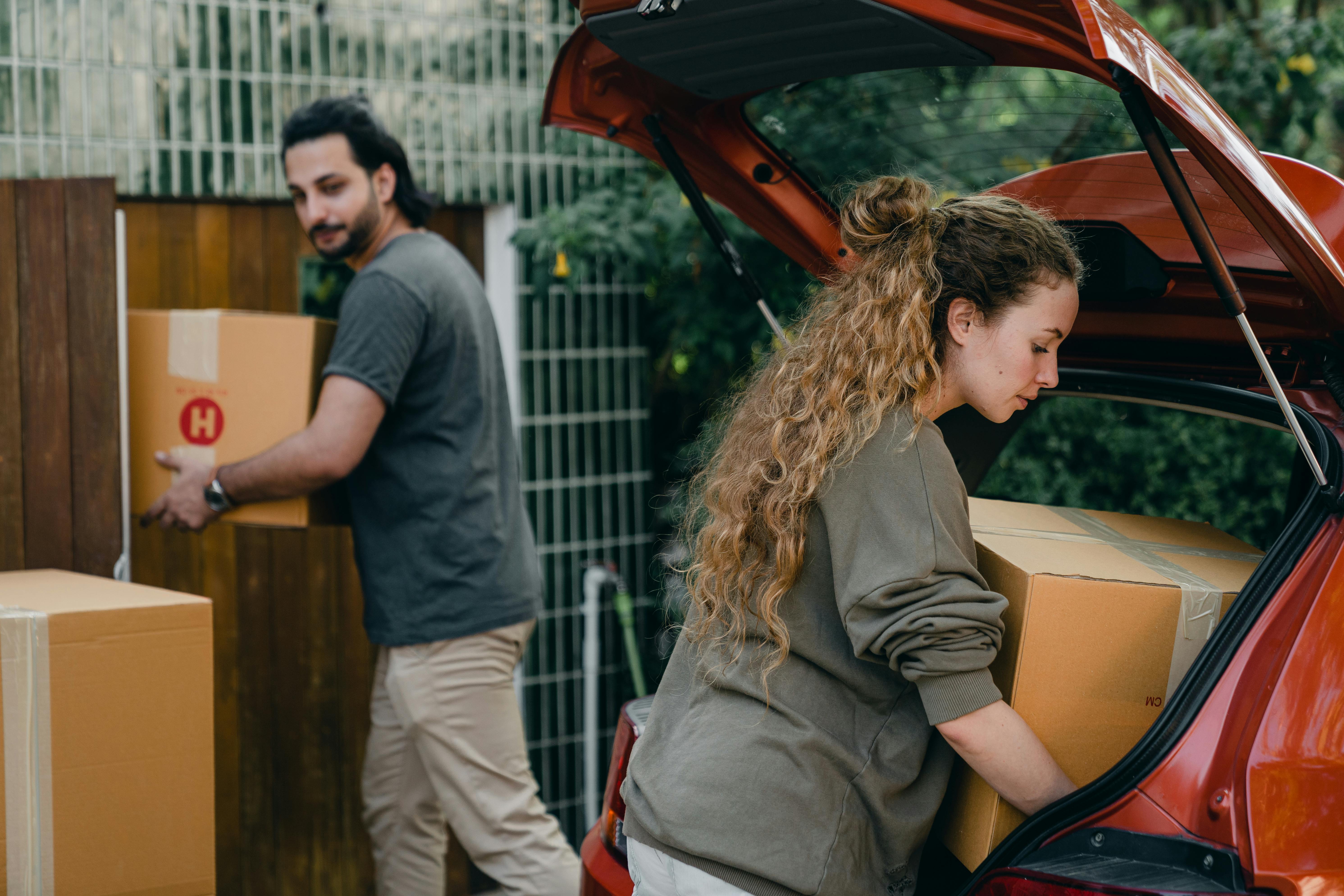
The nearest space to your front door may not be available for loading. Before the day, check the practical route from the proposed stopping point to the building entrance. Distance, corners and changes in level affect how a move can be organized.
Ask the responsible contact
Confirm local or building requirements with the appropriate authority or property contact. Do not assume that a general parking space permits a moving vehicle or that placing a cone creates a reservation. Share the confirmed arrangement with the driver or provider who will use it.
Describe the route accurately
Record approximate walking distance, steps, gates and any time restrictions. A photo can help identify the correct entrance, but avoid including access codes in a widely shared image. Tell the provider if the route differs from what was described when the move was arranged.
Keep a fallback contact available
If the space is blocked on arrival, the driver needs someone who can help resolve the issue. Keep that contact on your moving sheet. Avoid improvising an unsafe loading position to preserve the timetable. A brief advance check often prevents a long conversation while belongings are already coming downstairs.