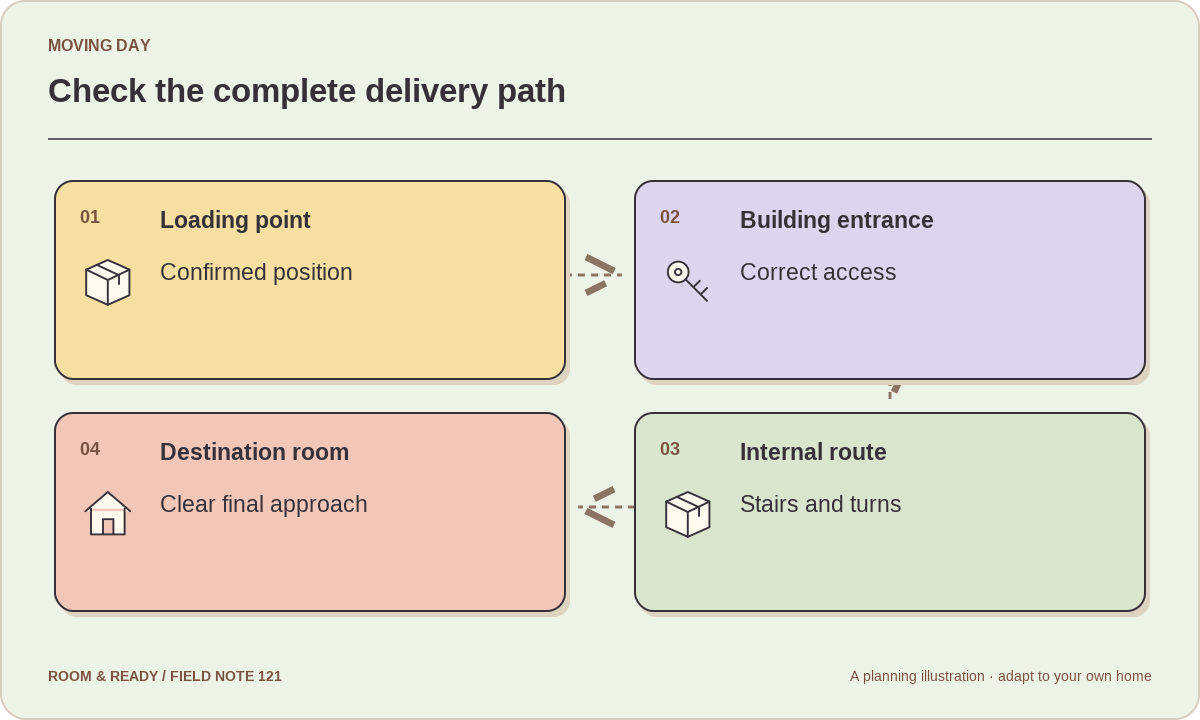

Access planning connects the vehicle to the final room. A clear front door is not enough if the route includes a locked service gate or a narrow stair landing. Walk the whole path in advance when possible and share the relevant constraints with the people handling the move.
Record the route accurately
Note entrances, steps, lifts, turns and any access windows. Measure tight points for large furniture and ask for an experienced assessment where necessary. Do not assume a door can be removed or a shared corridor can be used for staging without permission.
Confirm who provides access
Identify the person meeting the vehicle and the contact for any building-controlled entrance. Keep the current instructions on the contact sheet. Make sure the destination has its own confirmed arrangement rather than assuming the pickup plan covers both addresses.
Keep the route usable
Before loading or unloading, remove household clutter from the path while keeping required exits and shared areas clear. If conditions differ from the agreed description, tell the handler before moving an awkward item into the route. A short discussion at the start can prevent a piece from becoming stranded halfway between the vehicle and the room.