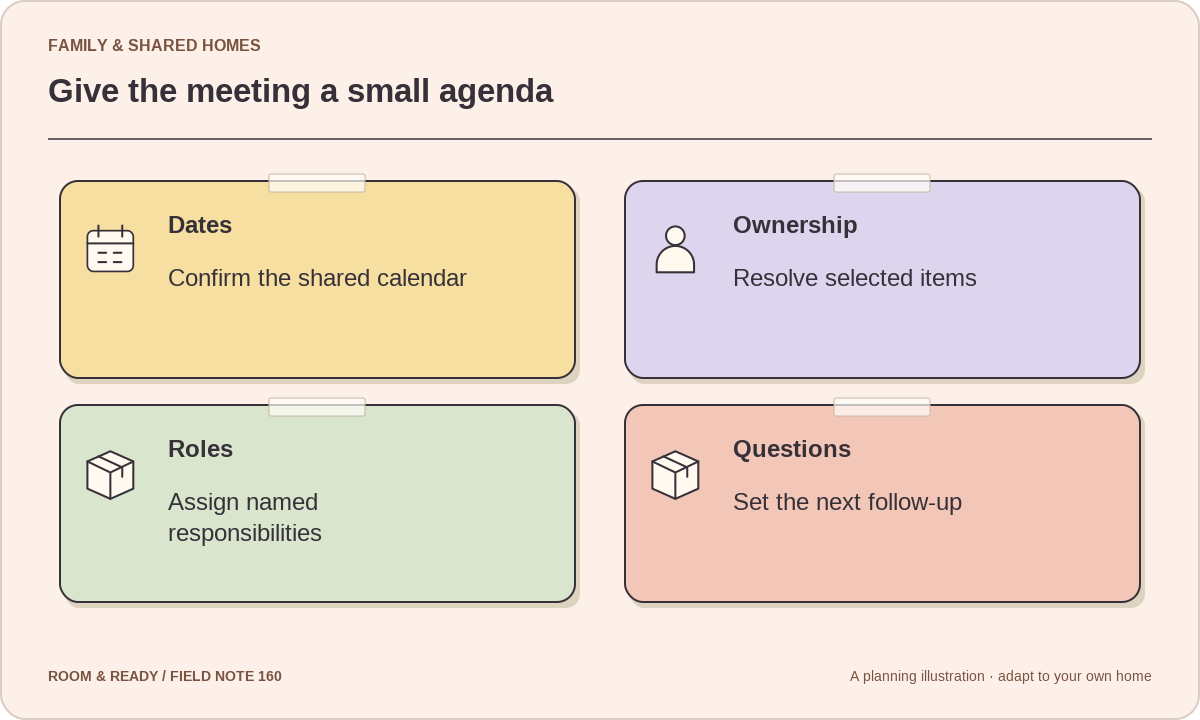

A moving meeting is useful when it closes decisions that block progress. Keep the agenda small and share it beforehand so household members can bring the needed information. Avoid turning the session into a review of every object in the home.
Choose decisions with consequences
Start with access dates, shared furniture destinations and responsibilities for the final day. Bring measurements or provider answers that affect the choices. If a fact is missing, assign someone to obtain it rather than debating assumptions for the whole session.
Write the result immediately
Record the decision, the owner of the next action and a realistic date. Make sure everyone understands the same outcome. A statement such as we should sort the kitchen is not complete until the task and responsibility are clear.
End with the next checkpoint
Summarize the small set of agreed actions and identify the unresolved questions. Keep the record in the shared planning location. Schedule another discussion only when it is needed to resolve a new dependency, allowing ordinary packing to proceed without requiring a meeting for every carton.