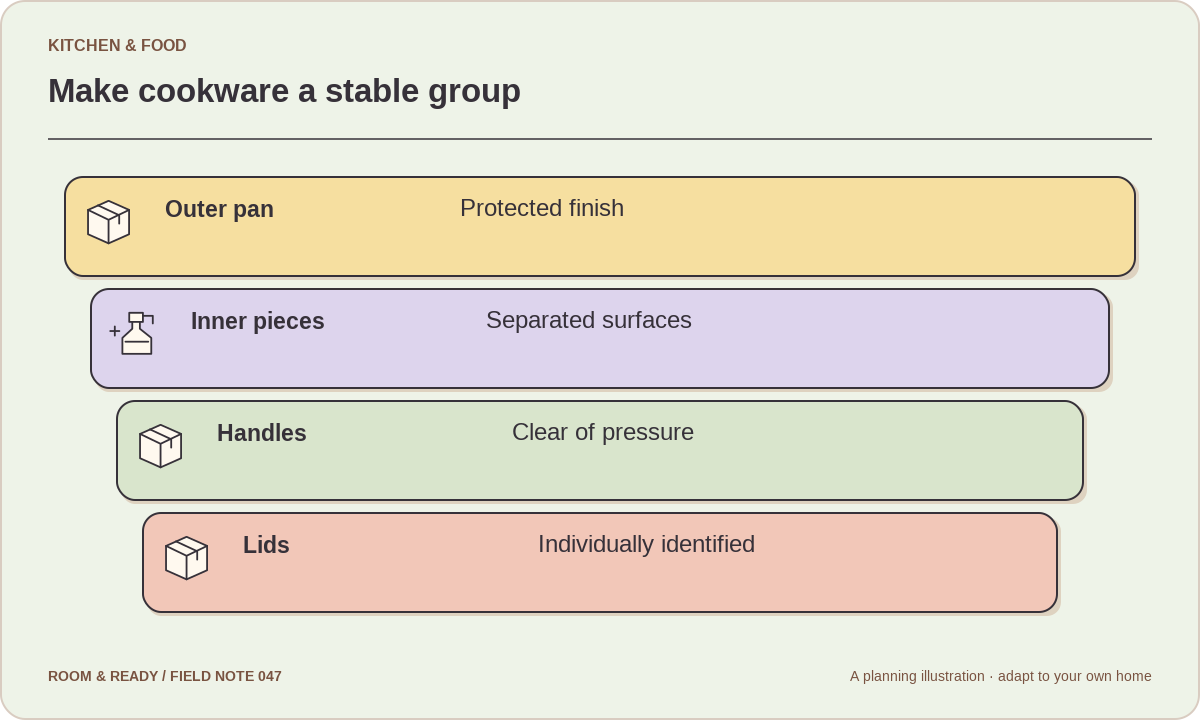

Cookware can use space efficiently, but nesting every pan together may damage finishes or create an awkward load. Inspect the shapes and the manufacturer's care guidance before deciding what can sit inside what. Keep the pan needed for your remaining meals outside the main packing group.
Separate different surfaces
Use suitable clean material between pieces that can safely nest. Avoid forcing a smaller pan into a larger one if the handles catch or the fit presses against a coated surface. A compact arrangement is helpful only when the pieces remain supported and easy to remove.
Treat lids as their own category
Protect glass lids appropriately and keep handles or knobs from taking pressure. Label the group so lids can be matched to the correct cookware after arrival. If a lid has a removable component, only detach it as intended and retain the fitting with the item.
Divide the weight
Several heavy pans may belong in more than one carton. Check the container and the handling needs before sealing. At the destination, unpack the most versatile pan first and store the remainder once you know how the new drawers and cupboards will be used.