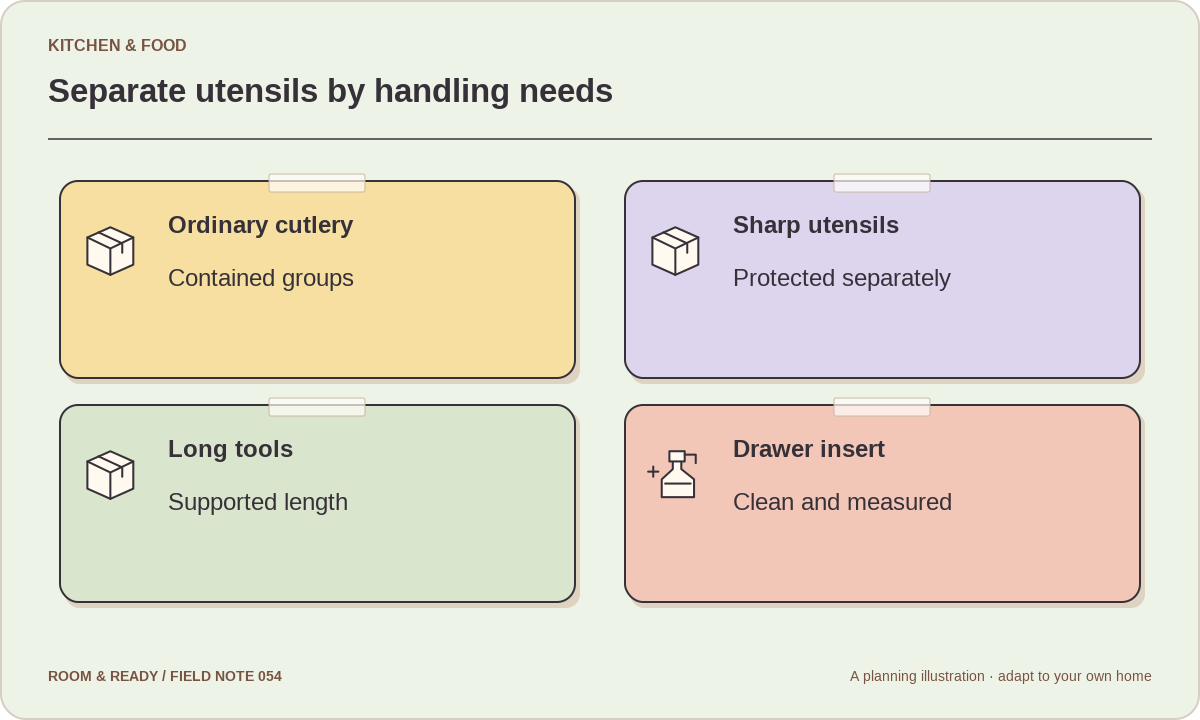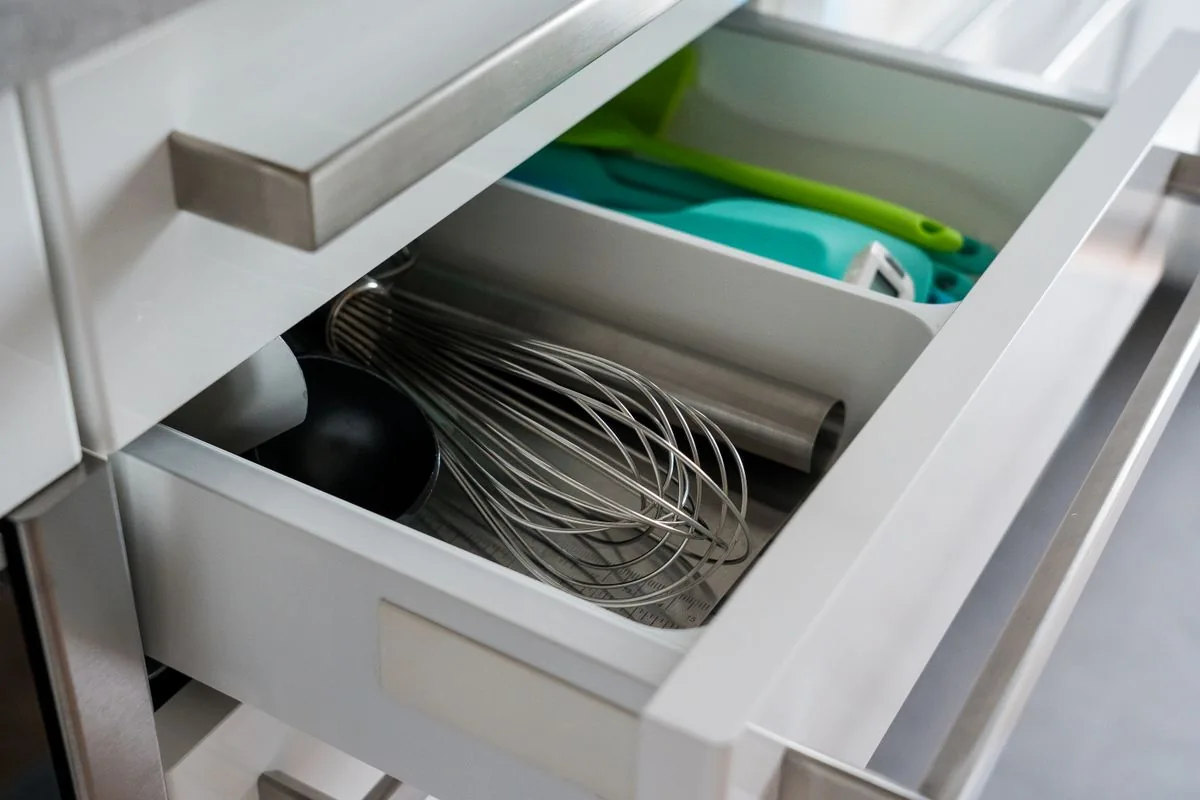

A cutlery drawer looks organized because the drawer insert holds everything in place. Once lifted, that order may disappear. Decide which pieces can travel as contained groups and which need separate protection before emptying the drawer onto the counter.
Sort by type and risk
Keep ordinary forks and spoons together in suitable closed groups. Treat knives and other sharp utensils with protective packaging designed to contain their edges. Do not assume a cutlery tray's open compartments will retain loose items during transport.
Review the drawer insert
Clean and dry the insert if you are taking it. Measure the new drawer before assuming it will fit. Pack it separately if using it as a container would leave the contents exposed or create an awkward package.
Preserve one daily set
Retain the utensils needed for the final meals and put them into the last kitchen kit afterward. Label the main group by function, such as everyday cutlery and serving tools. On arrival, arrange the essentials first, then adapt the remaining utensils to the new drawer instead of recreating a layout that no longer fits.