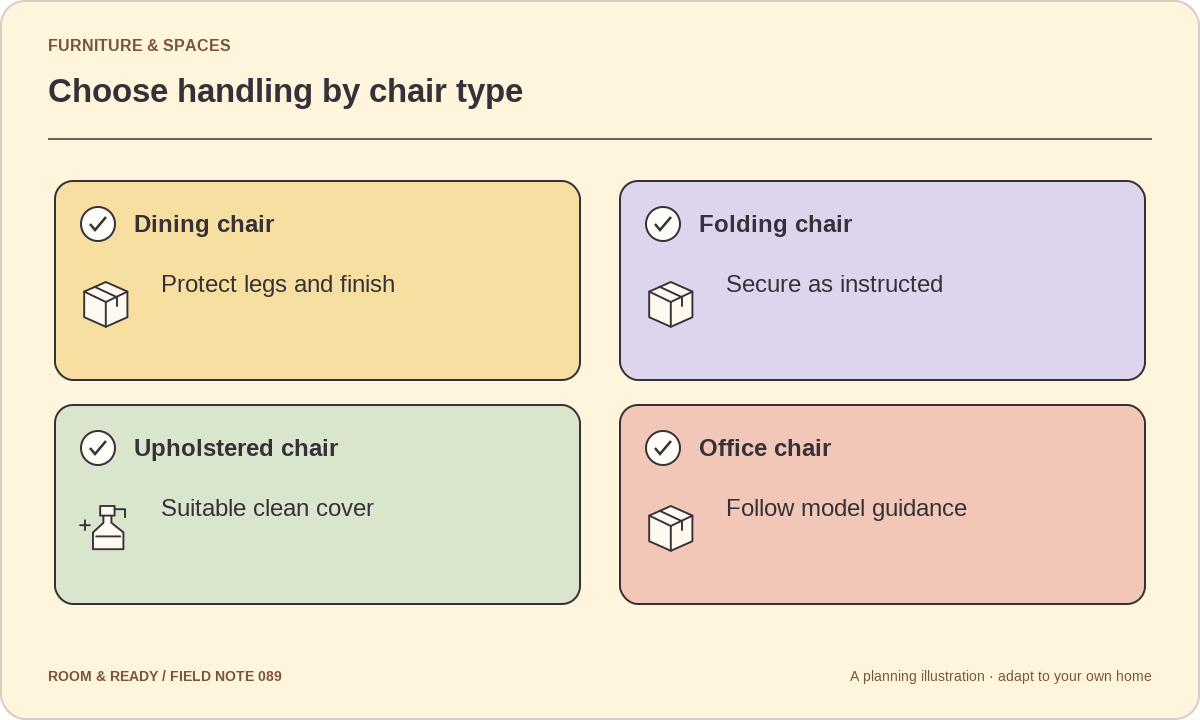

Chairs differ in shape, balance and the way their surfaces can contact one another. A stack that works for a purpose-made stacking chair may damage an upholstered or wooden chair. Identify the type and follow the manufacturer's handling guidance before arranging a group for transport.
Inspect and prepare
Remove loose cushions where appropriate and label them to the correct chair. Check for existing damage or unstable parts. Clean only as suitable for the material and allow any cleaned surfaces to dry before covering them.
Protect contact points
Use compatible wrapping on vulnerable legs, arms and finishes. Avoid adhesive directly on delicate surfaces. Do not force chairs into a nested arrangement that places weight on a backrest or compresses upholstery. Ask the handler how the group should be staged.
Give the first chair a role
Keep one usable seat available at the old home until it is no longer needed and identify a seat for the first evening at the destination. This small decision helps prevent every comfortable place from being packed while paperwork or meals still need attention. Inspect chairs after delivery before returning them to ordinary use.