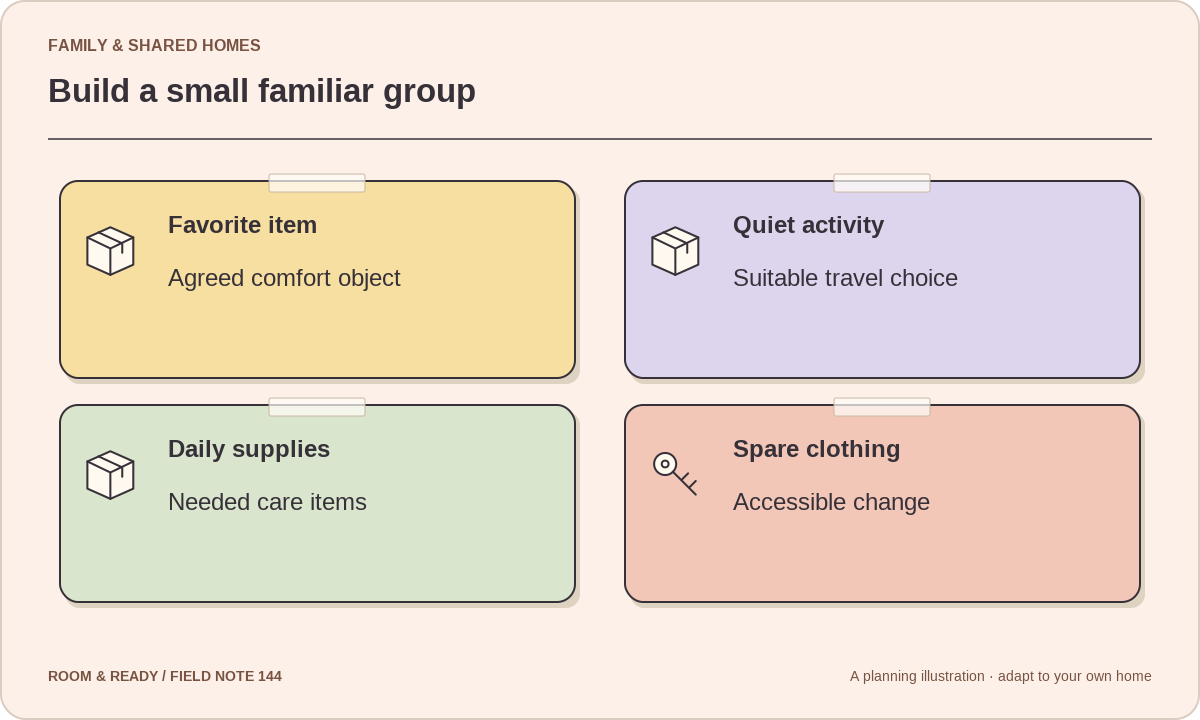

A comfort bag should contain a few useful, familiar things rather than the whole toy collection. Choose it with the child where appropriate and connect it to the day's supervision plan. The bag needs to remain accessible to the responsible adult throughout the transition.
Choose items deliberately
Include a familiar object and an activity suited to the journey and the child's age. Keep ordinary care supplies in the same plan, following the guidance you normally use. Avoid small or unsuitable items simply because they fit into a pocket.
Keep the bag out of the shipment
Use a distinct container and tell helpers where it belongs. If more than one adult shares responsibility, hand the bag over explicitly along with the child. Do not assume it will follow automatically when people change vehicles or locations.
Recheck on arrival
Place the bag in the prepared family area and return familiar items to a consistent spot. Keep it available until the child's room and routine are usable. Once the main belongings are unpacked, empty and reset the bag so a favorite object does not remain hidden in a travel compartment for days.